Article
Catfishing Explained: How to Stop Romance Scams

Uros Pavlovic
February 1, 2024
Online dating is a fast-growing industry, but the specter of catfishing looms, posing significant threats to users' emotional well-being and financial security. Catfishing is, in fact, a constant issue for online dating platforms. These companies strive to establish a secure and trustworthy environment, but that’s becoming a great challenge. This article delves into the core aspects of catfishing, exploring the tactics employed by malicious actors, and shedding light on the main signs that individuals should be vigilant of during their online interactions. The techniques of those engaging in deceptive practices require a comprehensive analysis of how catfishing works and how to prevent it.
What is catfishing?
What is the definition of catfishing? The term "catfishing" encapsulates a web of deceit within the online dating sphere. It refers to the creation of fictitious online personas with the intent to deceive and manipulate unsuspecting individuals. Catfishers meticulously construct false identities, often utilizing stolen photos and fabricating elaborate stories to establish a façade of credibility. This deceptive practice extends beyond mere anonymity; catfishers build emotional connections with their targets, fostering a false sense of intimacy. As we delve deeper into the workings of catfishing, it becomes apparent that its complexities demand efficient solutions for safer online dating.
An interesting history of catfishing
Catfishing, a relatively recent cybersecurity phenomenon, gained prominence as a serious concern in the early 2010s. Coined from the 2010 documentary "Catfish," the term became widely recognized through the subsequent MTV reality series of the same name, which debuted in 2012. With a decade of airing and over two hundred episodes, the show propelled "catfishing" into mainstream awareness.
The landscape of catfishing evolved further in the late 2010s, transforming from a deceptive online practice to a significant cybercrime resulting in substantial financial losses. Data from the FBI and Federal Trade Commission (FTC) underscore alarming trends in catfishing. Notably, from 2019 to 2022, the quarterly reports of catfishing scams witnessed an astounding increase of over 174%. Presently, reports estimate that there are approximately four times as many incidents as there were at the beginning of 2019 (source).
This trajectory emphasizes the escalating threat of catfishing in recent years, as cybercriminals exploit online platforms with increasing sophistication, making it imperative for individuals and platforms alike to stay vigilant and adopt robust security measures.
How do catfishers operate?
The deceptive tactics employed by catfishers are multifaceted, exploiting the vulnerabilities inherent in online interactions. Understanding these methodologies is essential for both online dating platforms and users aiming to fortify their defenses against such manipulative schemes.
Catfishers meticulously construct false identities, often starting with the creation of fake profiles that boast a curated collection of stolen or misleading images. These images serve as the visual scaffolding for their deceptive narratives. Through crafted bios and compelling personal stories, catfishers seek to establish a connection that transcends the digital realm.
Social engineering plays a pivotal role in their operations. Catfishers employ psychological manipulation to elicit trust and empathy from their targets. By exploiting the innate desire for connection, they weave intricate tales of hardship, success, or personal triumphs, tugging at the emotional strings of unsuspecting individuals.
Moreover, catfishers often orchestrate scenarios that necessitate financial assistance. Fabricated emergencies, unforeseen calamities, or seemingly genuine requests for aid become the linchpin of their deceit. The ultimate goal is not only emotional manipulation but also financial exploitation, amplifying the gravity of the damage inflicted on the victim.
As we dissect the operations of catfishers, it becomes evident that their strategies evolve alongside advancements in technology. Therefore, a proactive stance, grounded in comprehensive knowledge and sophisticated tools, is indispensable for online dating platforms to thwart these deceptive maneuvers effectively.
What are the red flags for online daters?
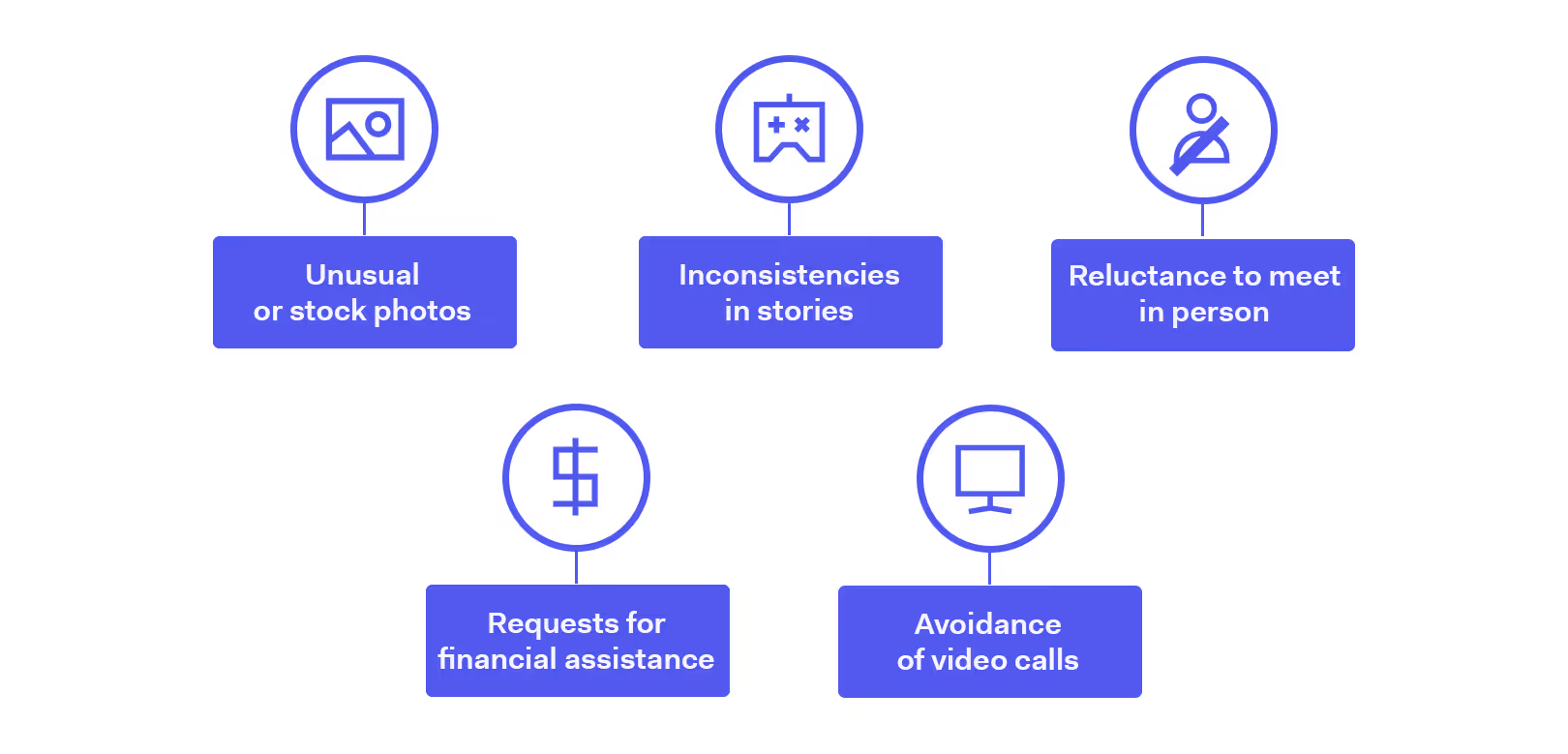
The discernment of red flags is pivotal for individuals navigating the intricate terrain of online dating. Recognizing signs indicative of potential catfishing can empower users to make informed decisions and protect themselves from falling prey to deceptive schemes.
Unusual or stock photos: Catfishers often resort to stolen or generic images to construct their fake personas. Users should be wary of profiles featuring overly polished or unrealistically attractive photos, as these may be indicative of deceptive intent.
Inconsistencies in stories: discrepancies in personal narratives, such as sudden changes in life circumstances or contradictory details, should raise suspicion. Catfishers struggle to maintain a consistent and authentic storyline, giving discerning users a critical red flag.
Reluctance to meet in person: genuine connections in online dating often progress to in-person meetings. Catfishers, however, may resist face-to-face encounters, citing various excuses. This reluctance to meet physically could signify an ulterior motive.
Requests for financial assistance: one of the most prominent red flags is the solicitation of financial aid. Catfishers often fabricate emergencies or crises, appealing to the emotions of their targets in an attempt to extract money. Online daters should approach such requests with skepticism.
Avoidance of video calls: video calls provide a tangible way to verify the authenticity of an online connection. Catfishers may dodge or delay video interactions, perpetuating the illusion while avoiding exposure. By cultivating an awareness of these red flags, online daters can fortify their defenses against potential catfishing attempts, fostering a more secure and authentic online dating experience.
How can online daters stay informed?
In the cat-and-mouse game of online dating, staying informed is a potent defense mechanism against catfishing. By embracing a proactive approach, users can navigate the digital landscape with heightened awareness, safeguarding themselves from potential deceptive encounters.
Educational Initiatives by online platforms: online dating platforms play a pivotal role in fostering user awareness. Implementing educational initiatives that highlight the nuances of catfishing, red flags, and best practices for secure online interactions empowers users to make informed decisions.
User verification tools: robust user verification tools serve as an invaluable resource for online daters. Platforms can integrate advanced verification processes, including document authentication and facial recognition, to enhance the credibility of user profiles, creating an additional layer of security.
Community vigilance and reporting: establishing a sense of community vigilance encourages users to look out for each other. Platforms should facilitate easy reporting mechanisms for suspicious activity, fostering an environment where users actively contribute to the collective safety of the community.
Continuous awareness campaigns: the dynamic nature of catfishing tactics necessitates ongoing awareness campaigns. Regularly updating users on emerging trends and providing insights into evolving strategies ensures that the online dating community remains resilient in the face of ever-changing threats.
Integration of AI and Machine Learning: Harnessing the power of artificial intelligence (AI) and machine learning (ML) can revolutionize catfishing prevention. These technologies can analyze patterns of behavior, detect anomalies, and identify potential catfishing attempts in real-time, offering a proactive defense against deceptive activities.
By incorporating these proactive measures into the fabric of online dating platforms, users can equip themselves with the knowledge and tools needed to navigate the digital landscape safely.
As online daters adopt proactive strategies, the role of technology becomes increasingly pivotal in fortifying defenses against catfishing. Let's delve into the ways technology, particularly risk intelligence, can elevate security measures within the online dating realm.
How to improve online dating security with risk intelligence
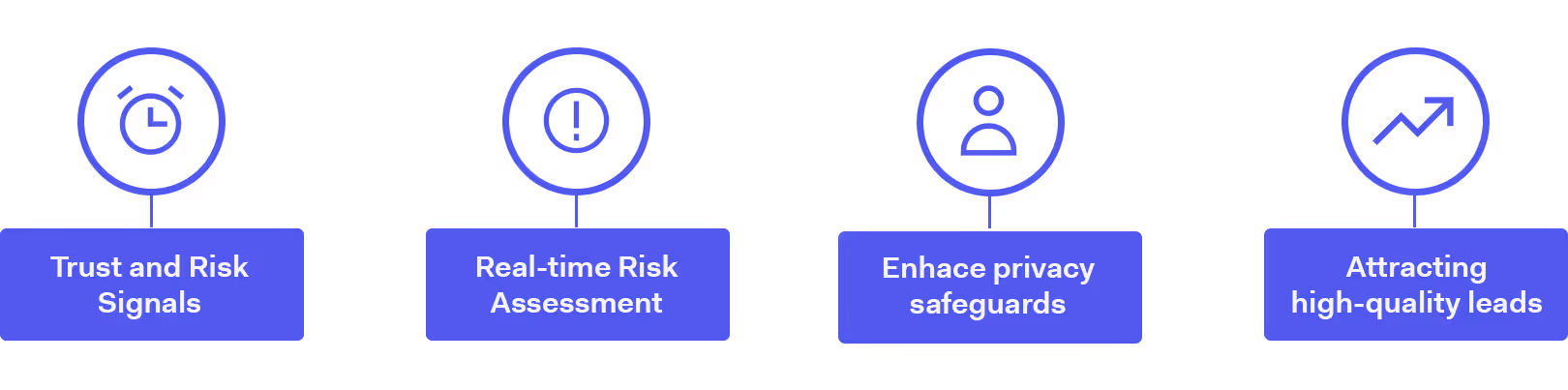
In the ever-evolving landscape of online security, risk intelligence emerges as a beacon of hope for online dating platforms seeking to fortify their defenses against catfishing and related deceptive practices.
Trust and risk signals: risk intelligence platforms, such as ours, leverage a diverse array of digital signals—phone, email, IP, browser, and device data—to provide a holistic understanding of user behavior. This comprehensive approach allows for nuanced analysis, offering insights into trustworthiness and potential risks.
Real-time risk assessment: the power of risk intelligence manifests in real-time risk assessment. By continuously monitoring and analyzing digital signals, online platforms can swiftly identify suspicious activities, enabling timely intervention and prevention of potential catfishing attempts.
Enhanced privacy safeguards: leveraging alternative data for risk assessment doesn't come at the expense of user privacy. Risk intelligence platforms can operate with a commitment to safeguarding user information, ensuring that the pursuit of security doesn't compromise the confidentiality of personal data.
As technology continues to shape the landscape of online dating, risk intelligence stands as a powerful ally, offering a sophisticated and nuanced approach to catfishing prevention.
While risk intelligence holds promise, understanding its practical implementation requires a deeper exploration of its role within the broader spectrum of online dating security.
Navigating the landscape of online dating scams
The realm of online dating is unfortunately rife with various scams, each presenting unique challenges for users and platforms alike. Among these, the notorious pigbutchering fraud and romance scams stand out as particularly insidious. Understanding the nuances of these scams is crucial for individuals seeking genuine connections and for online dating platforms committed to fostering a secure environment.
This section provides a holistic perspective on online dating scams, encompassing pigbutchering fraud, romance scams, and other deceptive practices. By illuminating the common threads that bind these scams, users and platforms can develop a nuanced understanding of the risks they face in the digital dating landscape. Insights into the psychology of scammers and their evolving techniques empower individuals to stay vigilant against these deceptive maneuvers.
The elusive nature of bitbutchering fraud
Pigbutchering fraud, a deceptive practice characterized by financial exploitation, preys on the vulnerability of those seeking companionship. Fraudsters engage in elaborate schemes, manipulating emotions to extract financial resources from unsuspecting victims. This section delves into the tactics employed in pigbutchering fraud, shedding light on the evolving nature of this deceitful practice within the context of online dating.
The heartbreaking reality of romance scams
Romance scams, a pervasive threat within online dating, involve the cultivation of romantic relationships with the sole intent of financial gain. Individuals perpetrating these scams invest time and effort in building emotional connections, only to exploit trust for financial ends. Examining the heartbreaking reality of romance scams provides a sobering understanding of the emotional and financial toll inflicted upon victims.
Understanding the intricacies of online dating scams is paramount for both users and platforms, as it enables a proactive approach to detection and prevention. By dissecting these fraudulent practices, individuals can navigate the online dating landscape with heightened awareness, fostering a safer digital space for authentic connections.
As we conclude our exploration into the various scams within online dating, the imperative for continuous vigilance and education becomes ever clearer. Let's wrap up our discussion by reaffirming the commitment required from all stakeholders to create a secure and trustworthy online dating environment.
Catfishing prevention with risk intelligence
Implementing risk intelligence within the framework of online dating security requires a strategic and meticulous approach. By integrating this advanced technology, platforms can proactively counter the evolving landscape of catfishing and foster a safer digital space for users.
Integrating risk intelligence into user verification: utilizing risk intelligence as part of the user verification process enhances the credibility of profiles. By cross-referencing multiple digital signals, platforms can establish a more accurate understanding of user authenticity, adding an extra layer of security to the registration phase.
Dynamic risk scoring for user profiles: implementing dynamic risk scoring allows platforms to assign real-time risk assessments to user profiles. Continuous monitoring and analysis enable platforms to adapt to emerging threats swiftly, providing users with up-to-date risk information.
Behavioral analysis for anomaly detection: Risk intelligence employs behavioral analysis to detect anomalies in user behavior. Unusual patterns or deviations from established norms trigger alerts, enabling platforms to investigate and mitigate potential risks before they escalate.
Preventing financial exploitation: one of the primary objectives of risk intelligence is to prevent financial exploitation. By scrutinizing transactional data and identifying patterns associated with catfishing attempts, platforms can intervene and protect users from falling victim to fraudulent financial requests.
Educating users on risk signals: integrating risk intelligence into user education initiatives is crucial. By educating users on the risk signals analyzed by the platform, individuals become more adept at identifying potential threats and actively participating in the collective effort to maintain a secure online dating environment.
As risk intelligence becomes an integral part of online dating security, the need for continuous improvement and collaboration within the industry becomes apparent. Let's explore how the synergy of efforts can lead to a more resilient online dating landscape.
Collaboration for a safer online dating ecosystem
The battle against catfishing extends beyond individual platforms, requiring industry-wide collaboration to create a resilient and secure online dating ecosystem. By sharing insights, and best practices, and collectively addressing emerging challenges, the online dating industry can fortify its defenses against the pervasive threat of catfishing.
Information sharing and threat intelligence: establishing channels for information sharing and threat intelligence fosters a collective understanding of evolving catfishing techniques. Online dating platforms can collaborate to disseminate timely warnings, ensuring that the entire industry remains vigilant against emerging threats.
Joint research initiatives: collaborative research initiatives enable the industry to pool resources and expertise. By conducting joint studies on catfishing trends, platforms can derive actionable insights that inform the development of more effective prevention strategies.
Standardized reporting mechanisms: standardizing reporting mechanisms for suspicious activities enhances the industry's ability to respond swiftly. A unified approach ensures that information flows seamlessly between platforms, facilitating coordinated efforts to investigate and neutralize potential catfishing attempts.
Industry-wide education campaigns: coordinated education campaigns amplify the impact of user awareness initiatives. By combining resources, the industry can reach a broader audience, empowering users with the knowledge needed to identify and report catfishing attempts across various platforms.
Regulatory engagement: active engagement with regulatory bodies enhances the industry's ability to establish and adhere to standardized security practices. Collaborating with regulatory authorities ensures that the online dating sector evolves within a framework that prioritizes user safety.
In the collaborative spirit of industry-wide efforts, the online dating community can strengthen its collective resilience against catfishing, fostering a safer and more trustworthy digital space for all users.
As we conclude this exploration, it becomes evident that the battle against catfishing requires a multifaceted and united front. By embracing technological advancements, education initiatives, and collaborative endeavors, the online dating industry can continue to evolve and provide users with a secure environment for meaningful connections.
Be sure to reach out to our team of experts to understand more about how to prevent online dating scams.