Payment fraud

Verify payees before money leaves the account

Prevent impersonation and card-not-present attacks with real-time checks.

Payment fraud at a glance

Payment fraud happens when money ends up in the hands of criminals, either as a result of phishing and manipulation or through account takeover tactics.

Payment protection without added friction

Authorised push payment scams, account takeover and card-not-present fraud are on the rise. Trustfull strengthens payee verification without slowing down legitimate transactions.

Real-time defence

Assess payer and payee risk in real time at login, checkout or beneficiary creation.

Silent checks

Run background checks to block fraudulent transactions without getting in the way of legitimate ones.

Powered by OSINT

Leverage the power of hundreds of open source intelligence signals to spot inconsistencies and red flags.

Flexible Rules

Customize scoring models and risk rules for different channels, use cases and regulatory environments.
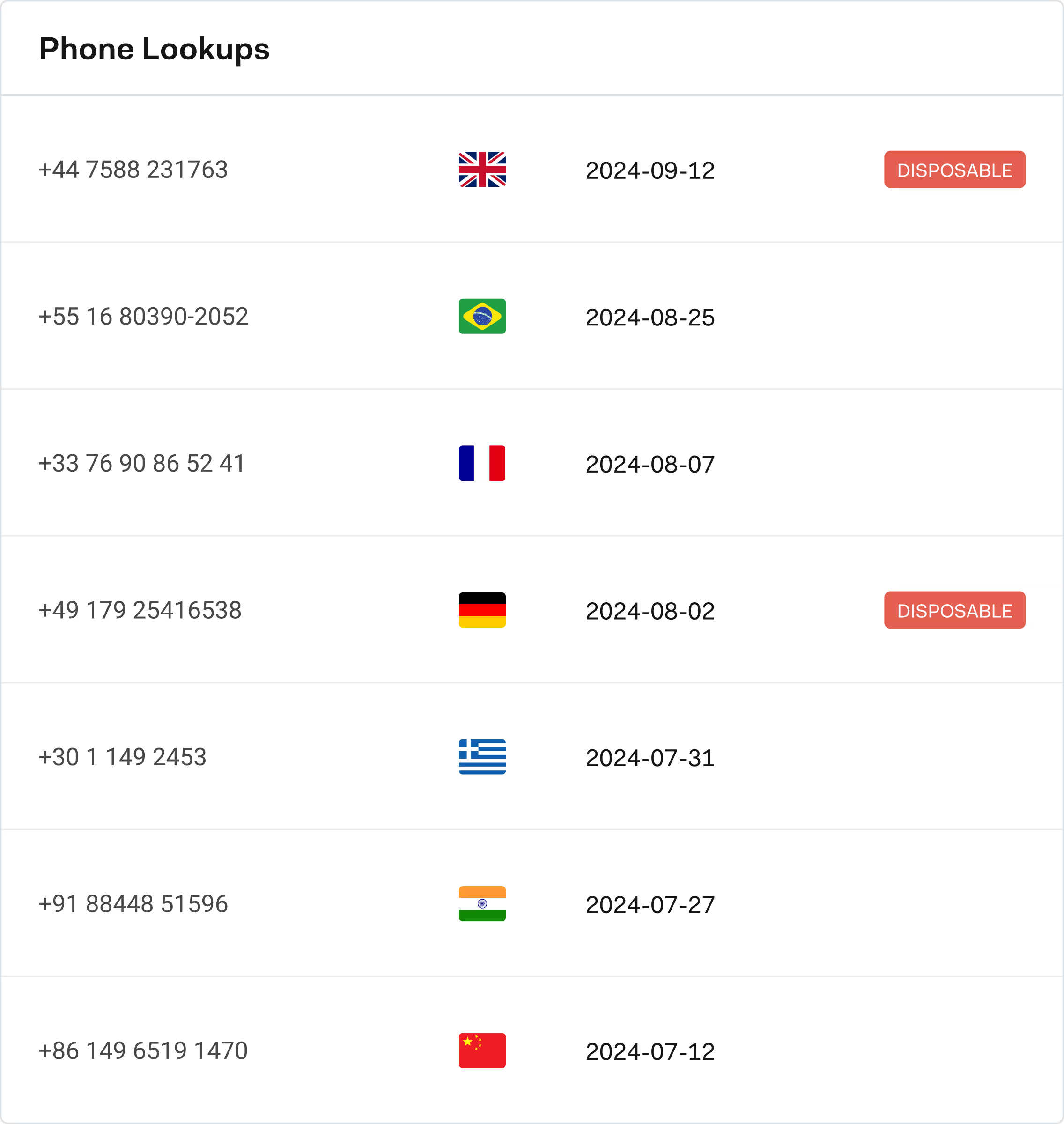
Table listing phone numbers with country flags, dates, and disposable status; includes UK, Brazil, France, Germany, Greece, India, and China.

Phone number verification

Verify phone numbers linked to all payments’ beneficiaries to uncover high-risk activity:
Retrieve MNO, porting history and phone-to-name details to validate identity
Detect connected services to check if a number belongs to a real contact
Flag disposable, virtual and high-risk numbers commonly used in scams
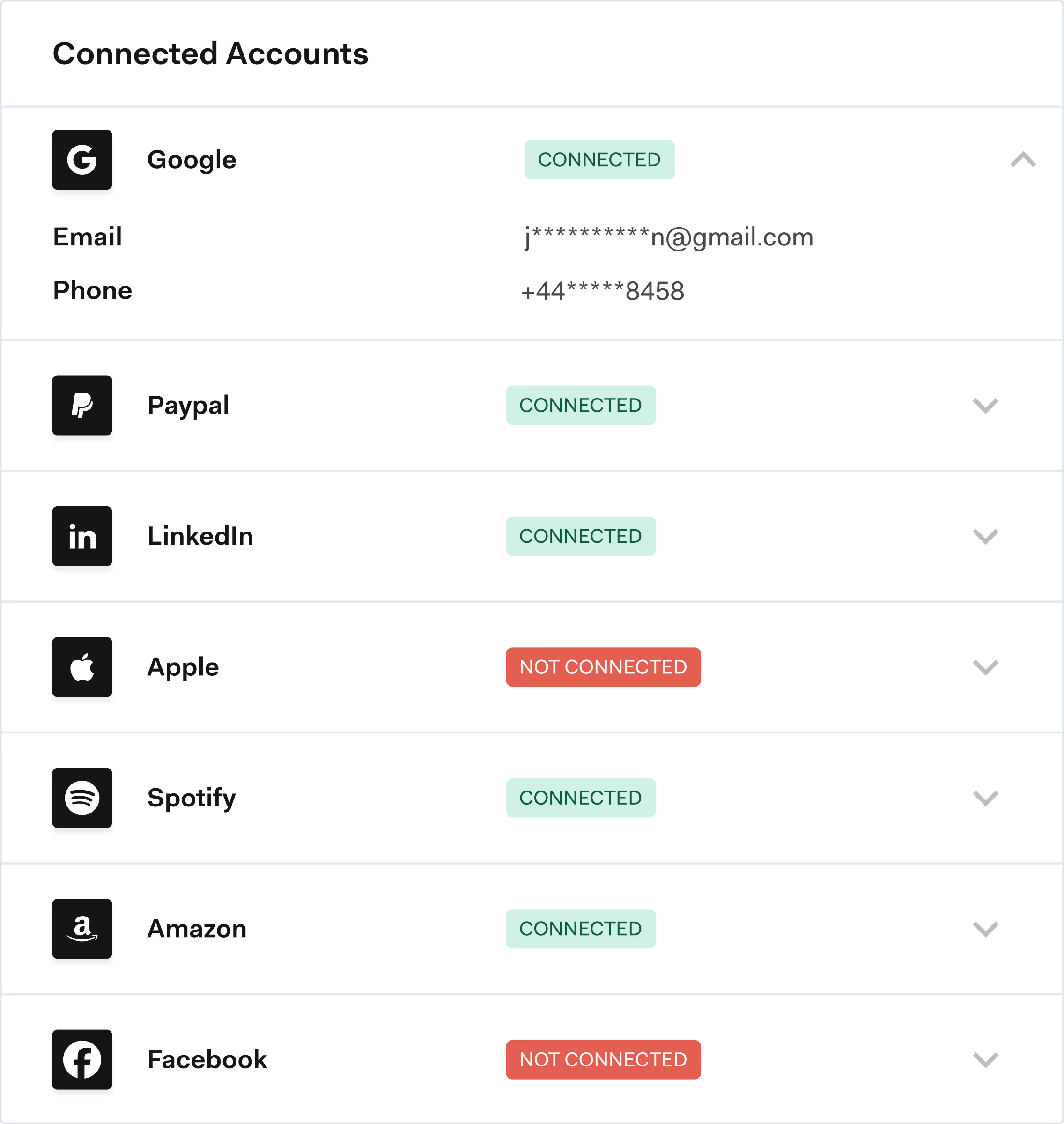
List of connected accounts showing Google, Paypal, LinkedIn, Spotify, and Amazon as connected, and Apple and Facebook as not connected.

Email address analytics

Analyze email addresses associated with payees or added to existing user accounts:
Retrieve a list of online services linked to an email to spot placeholders
Check exposure in known data breaches and other open sources
Flag newly created or lookalike emails lacking a consistent digital footprint
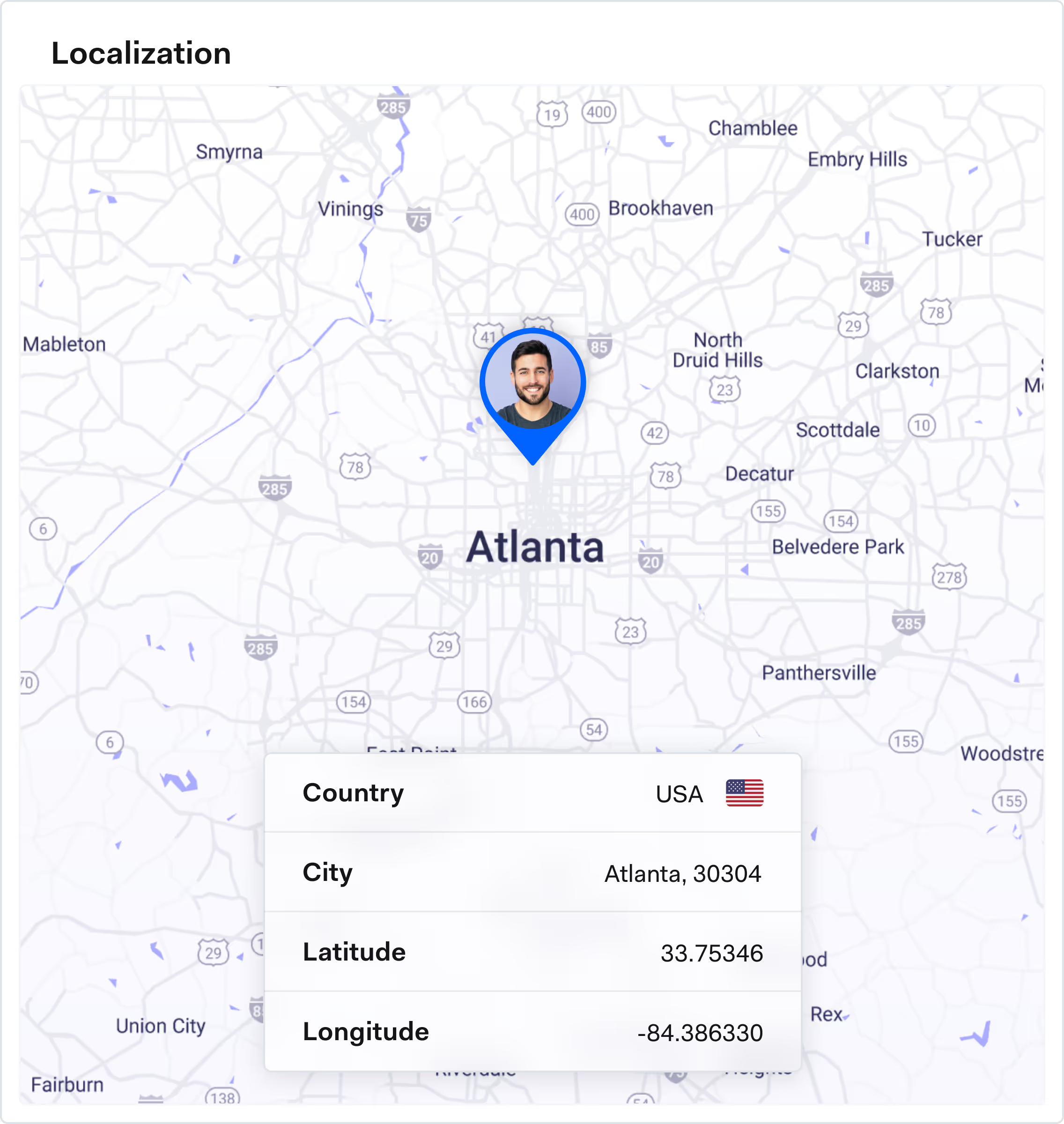
Map of Atlanta with a blue location pin showing a woman's face and a data box displaying country USA.

Global IP intelligence

Use IP, network and geolocation data to protect payments end-to-end:
Detect mismatches between IP geolocation and billing or shipping address
Identify privacy red flags such as VPN, proxy or TOR usage
Flag high-risk traffic from data centres associated with scams and card testing
User interface for defining a rule with conditions: Phone status is Connected and Email connected apps is greater than 5, setting expected result score to 30 with a save rule button.

Seamless API integration

Easily integrate Trustfull’s verification and risk scoring capabilities through API:
Embed risk checks across all key payment touchpoints
Access comprehensive documentation on all Trustfull endpoints
Continuously finetune scoring models and risk rules to optimize accuracy
Table listing phone numbers with country flags, dates, and disposable status; includes UK, Brazil, France, Germany, Greece, India, and China.
List of connected accounts showing Google, Paypal, LinkedIn, Spotify, and Amazon as connected, and Apple and Facebook as not connected.
Map of Atlanta with a blue location pin showing a woman's face and a data box displaying country USA.
User interface for defining a rule with conditions: Phone status is Connected and Email connected apps is greater than 5, setting expected result score to 30 with a save rule button.

Frequently asked questions

What is payment fraud and when does it occur?
Payment fraud refers to both authorised and unauthorised transactions that result in money reaching criminals. It includes authorised push payment (APP) scams, where victims are tricked into voluntarily sending funds to fraudulent beneficiaries, and attacks where stolen cards or account credentials are used without consent to complete purchases or transfers.
What are the main types of payment fraud digital businesses face today?

Key types include authorised push payment / beneficiary impersonation scams, account takeover-based payments and withdrawals, card-not-present fraud, card testing and small probes at scale,. These patterns often overlap, with the same actors using stolen data, social engineering and mule accounts to move funds.

What are common signs and red flags of payment fraud?

Red flags include new beneficiaries with urgent, high-value requests; sudden changes to account or payee details; multiple declined attempts followed by a successful transaction; unusual ticket sizes; and repeated use of different cards or accounts from the same device or IP.

How do fraudsters scale these attacks across many users and merchants?

Fraudsters rely on phishing kits, spoofed domains and social engineering scripts to launch scams at scale. At the same time, they use credential stuffing tools, bots and automation to test huge volumes of stolen cards and logins with micro-transactions.

How can organisations detect and prevent payment fraud without adding unnecessary friction?

Phone and email analytics, IP and device intelligence, OSINT-based checks and real-time risk scoring allow organisations to step up controls only when risk is high, while trusted customers continue to process transactions with minimal disruption.

Can’t find the answer you’re looking for?

Book a 30-minute consultation with our team of fraud experts and let us know how we can help.

Learn more about Payment Fraud

Let’s tackle Payment Fraud together

Contact us today and let’s discuss how Trustfull’s advanced solutions can help you cut losses, strengthen security, and safeguard your customer experience.
TRUSTED BY WORLD‑LEADING COMPANIES
Twilio logoYounited logoNexi logoRefinitiv logoElavon logoCofidis logoAdmiral logolastminute.com logo