New account fraud

Detect fake accounts at signup

Build an invisible first line of defence against synthetic identities and fake users.

New account fraud at a glance

New account fraud occurs when fraudsters open accounts using stolen or fabricated identity data to access promotions, credit, or financial services they never intend to use legitimately.

Frictionless protection against new account fraud

New account fraud and synthetic identities are among the fastest-growing threats to digital businesses. Trustfull helps you fight back with the power of hundreds of digital signals.

First line of defence

Assess user risk at the very beginning of the onboarding process.

Silent checks

Detect fake accounts without slowing down legitimate users.

OSINT-based

Leverage the power of hundreds of digital open source intelligence signals.

Fully customizable

Customize scoring models to meet your business’s specific requirements.
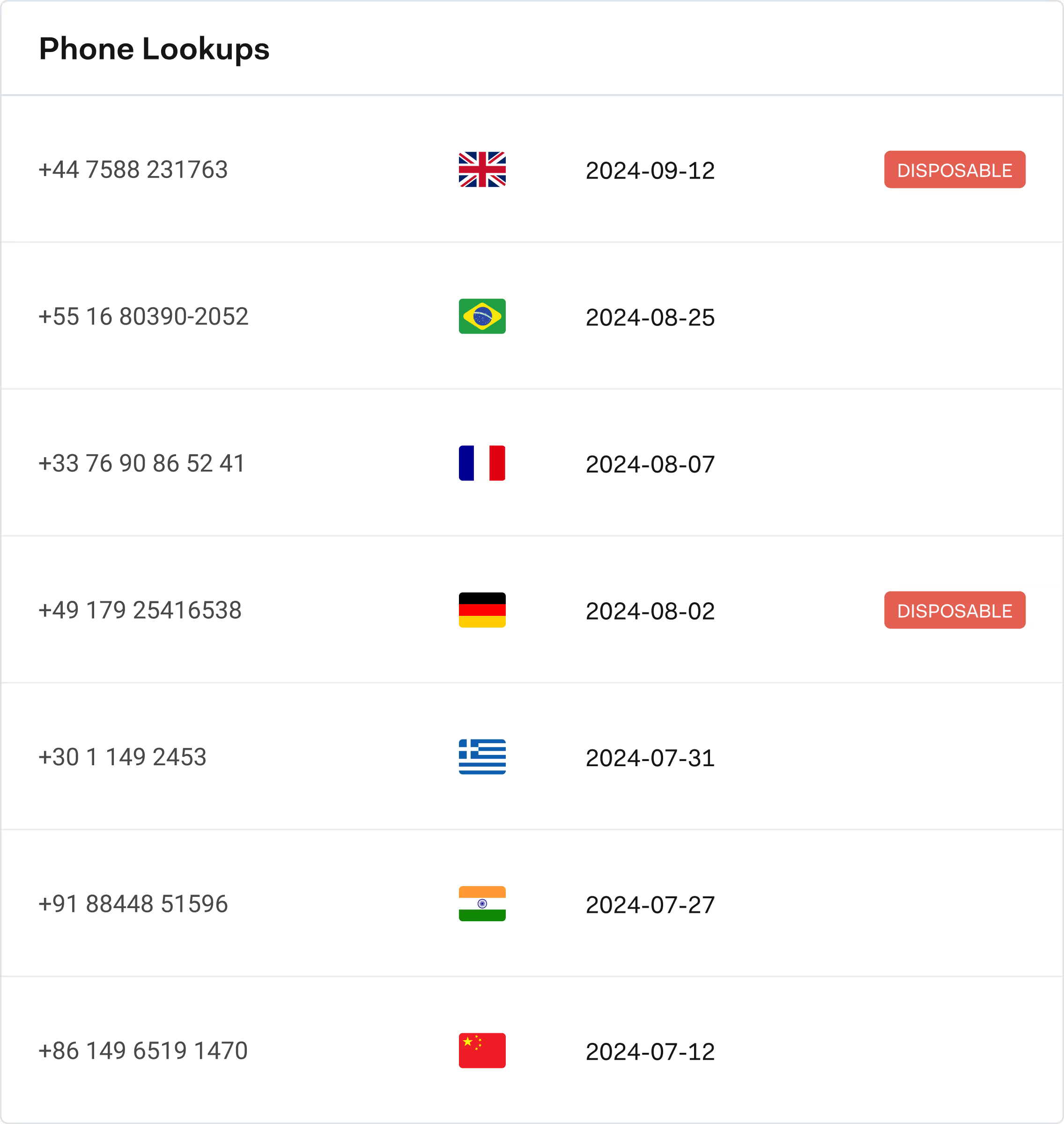
Table listing phone numbers with country flags, dates, and disposable status; includes UK, Brazil, France, Germany, Greece, India, and China.

Phone number verification

Verify phone numbers provided at sign-up to detect high-risk new accounts:
Retrieve MNO, porting history and phone-to-name details
Detect messaging apps and other connected online services
Flag disposable phone numbers anywhere in the world
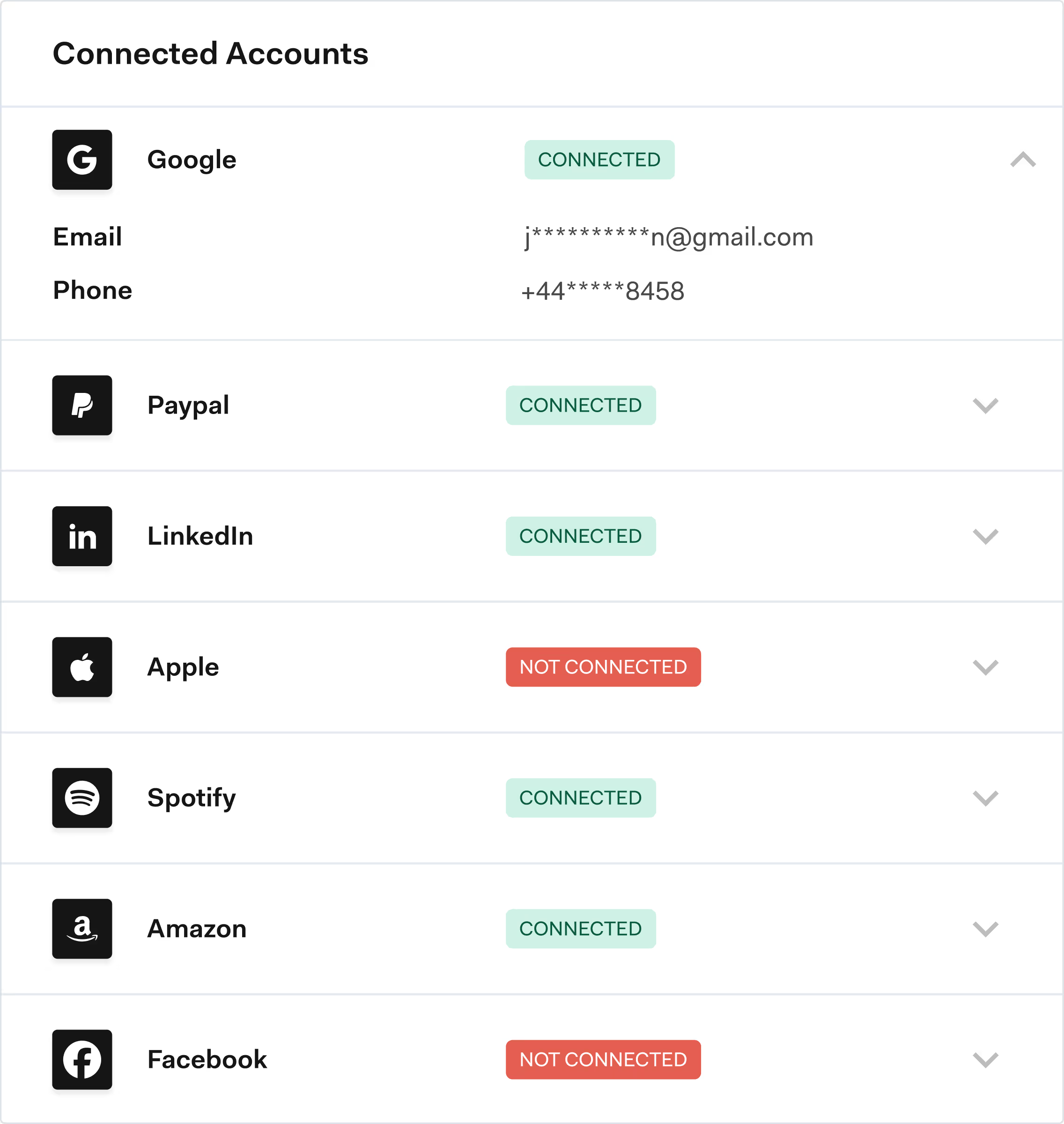
List of connected accounts showing Google, Paypal, LinkedIn, Spotify, and Amazon as connected, and Apple and Facebook as not connected.

Email address analytics

Analyze users’ email addresses for signs of abuse or synthetic identities:
Retrieve a list of online services linked to the email
Search for the email in a vast library of known data breaches
Analyze public profile pictures for age and gender estimation
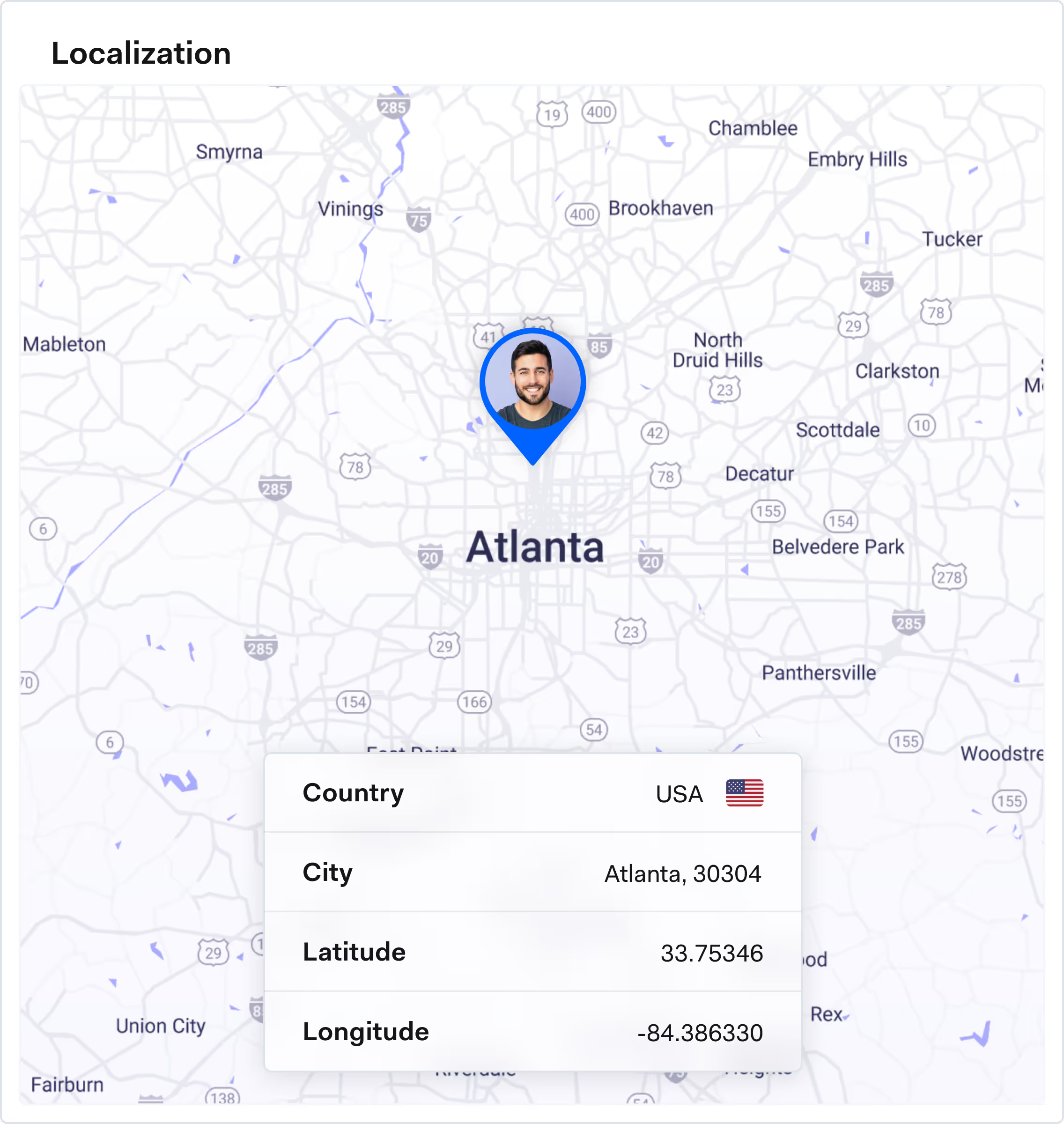
Map of Atlanta with a blue location pin showing a woman's face and a data box displaying country USA.

Global IP intelligence

Leverage geolocation data to spot fake accounts at signup:
Detect mismatches between users’ IP and declared location
Identify privacy red flags like VPN, proxy or TOR usage
Flag high-risk traffic from known data center IPs
User interface for defining a rule with conditions: Phone status is Connected and Email connected apps is greater than 5, setting expected result score to 30 with a save rule button.

Seamless API integration

Easily integrate Trustfull’s risk scoring capabilities through API:
Build seamless onboarding workflows with built-in fraud checks
Access comprehensive documentation on all Trustfull’s endpoints
Customize scoring models and risk rules over time, based on results
Table listing phone numbers with country flags, dates, and disposable status; includes UK, Brazil, France, Germany, Greece, India, and China.
List of connected accounts showing Google, Paypal, LinkedIn, Spotify, and Amazon as connected, and Apple and Facebook as not connected.
Map of Atlanta with a blue location pin showing a woman's face and a data box displaying country USA.
User interface for defining a rule with conditions: Phone status is Connected and Email connected apps is greater than 5, setting expected result score to 30 with a save rule button.

“The integration of Trustfull’s identity scoring algorithms in our AML/KYC process allowed our bank to identify suspicious behavior in the account opening phase, with positive impacts on the overall onboarding process and account opening times.”

Luca Crivellari

Security & Antifraud Director, Banca Sella

Read more
Sella logo

Frequently asked questions

What is new account fraud and how does it work?
New account fraud happens when fraudsters open accounts using stolen or fake identity data to abuse promotions, lines of credit, or other financial services.
What is synthetic identity fraud and how is it different from traditional identity theft?

Synthetic identity fraud combines real data with fake details to create a “new” person. Unlike traditional identity theft, there’s no single real victim who notices quickly. These synthetic profiles can age over time, build credit, and then default or cash out at scale.

What are the most common signs and red flags of new account fraud at onboarding?

Common red flags include mismatched identity data, disposable emails, VOIP numbers, and devices used for many different identities. You may see rapid-fire applications from the same IP, address, or device fingerprint.

How do fraudsters create synthetic identities to open fake accounts?

Fraudsters combine breached or stolen personal data with fabricated names, newly registered email addresses and disposable phone numbers. They apply for credit or accounts, slowly building a history with low-risk behavior so the identity looks “real.” Once trusted, they request higher limits, loans, or products and then stop paying or cash out.

How can businesses detect and prevent new account and synthetic identity fraud without adding unnecessary friction?

Effective strategies include email and phone analysis, device and IP intelligence, and phone-to-name or email-to-name checks. Layering data sources and leveraging open source intelligence (OSINT) techniques helps flag risky applications while letting good customers sail through.

Can’t find the answer you’re looking for?

Book a 30-minute consultation with our team of fraud experts and let us know how we can help.

Learn more about New Account Fraud
Let’s tackle New Account Fraud together

Contact us today and let’s discuss how Trustfull’s advanced solutions can help you cut losses, strengthen security, and safeguard your customer experience.
TRUSTED BY WORLD‑LEADING COMPANIES
Twilio logoYounited logoNexi logoRefinitiv logoElavon logoCofidis logoAdmiral logolastminute.com logo