Article
How Fintech Companies Can Use IP Analysis to Enhance User Verification

Uros Pavlovic
October 30, 2024

Due to the nature of their products and services, user verification remains a key priority for Fintech companies. One of the greatest challenges faced by Fintech providers is how to correctly identify and block increasingly sophisticated fraud tactics, especially during the crucial digital onboarding phase. Fintech companies need reliable ways to verify identity and detect risk during the account creation process without introducing friction. This is where IP analysis steps in; it effectively uncovers valuable insights about users right at the start of their onboarding journey.
When IP data is methodically analyzed, fintechs can unveil hidden behaviors and identify mismatches between a user’s self-reported information and their digital footprint. From verifying locations to detecting unusual activity, IP analysis strengthens the onboarding process, making it more secure without impacting the user experience.
This article explores how fintech companies can rely on IP analysis to enhance user verification, detect fraudulent behavior early, and improve the overall security of their onboarding process.
IP analysis as a critical tool for user verification in fintech
In recent years, IP analysis has become a critical resource for strengthening the digital onboarding process for fintech companies, offering the ability to verify location data, detect suspicious activity, and filter out high-risk users. For fintechs, verifying user authenticity from the beginning of the onboarding journey is essential to secure their platform and guarantee a compliant provision of financial services.
Through IP analysis, fintech companies can identify risk indicators based on a user’s IP address. For instance, an IP address associated with a distant location or an unusual Internet Service Provider (ISP) may signal a potential risk. When combined with other data signals, IP analysis reveals patterns that highlight discrepancies, allowing fintechs to filter out questionable sign-ups or halt potentially fraudulent account openings. The use of IP analysis to screen customers during onboarding not only deters fraud but also fosters a safer and more trustworthy digital experience for genuine users.
Verifying user identity with IP address lookup
IP analysis contributes to stronger user identity verification primarily by checking IP address ownership data. Through the parsing and assessment of the user’s IP address, fintech companies can determine whether it aligns with the information the user has provided, such as their claimed location or ISP details. This alignment—or lack thereof—can be an early indicator of risk.
IP address owner lookups are particularly useful when onboarding users from locations known for high levels of fraud. For example, an IP linked to a distant country or an ISP commonly used for anonymizing traffic may be cause for additional verification steps. Through IP ownership analysis, fintech companies can not only uncover key signals to validate a user’s identity but also detect red flags that suggest the use of anonymization tools, such as virtual private networks (VPNs), or proxies. These key IP checks can be added with little effort to existing fraud prevention strategies.
How do fraudsters hide or manipulate IP addresses?
Fraudsters frequently use tactics to mask or alter their real IP address, attempting to bypass security measures during the onboarding process. Cunningly, fraudsters can appear in one location while operating from a completely different one, often in regions flagged for high levels of suspicious activity. Common methods include VPNs, proxies, and the TOR network, each designed to hide the user’s actual location and make it difficult for systems to detect fraudulent activity.
Specifically, VPNs (Virtual Private Networks) and proxies are tools that reroute a user’s internet connection through different servers, masking their real IP address and location. TOR (The Onion Router) is a network designed to anonymize online activity further by bouncing connections across multiple servers worldwide, making it even harder to trace the user’s original IP address. These tools are often used by fraudsters to conceal their true location and evade detection during verification.
For fintech companies, identifying these methods is crucial to prevent fraud and secure the onboarding process. IP analysis can detect indicators of these tactics by recognizing IPs linked to known anonymization services or unusual patterns in ISP and geolocation data. Spotting these manipulations early in the user verification process helps fintechs flag high-risk users and apply additional scrutiny to prevent fraudulent accounts from being created.
What insights does IP analysis reveal during onboarding?
IP analysis uncovers a wealth of information that fintech companies can leverage to make better-informed decisions during onboarding.
Geolocation Intelligence is a key component of IP analysis, retrieving reliable geo information from users’ IP addresses, with no need for additional permission requests. So, if a user’s claimed location does not match the geolocation revealed by the IP analysis, or if an IP address is associated with unusual ISPs, this could suggest potential fraud. Additionally, using IP geolocation to monitor repeated login attempts from different locations can help identify risky behavior or account takeover attempts well beyond onboarding.
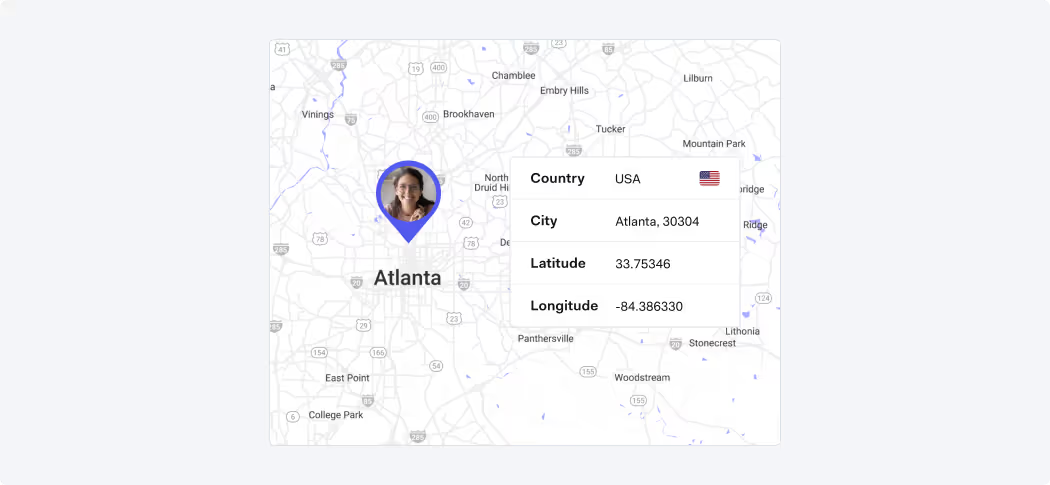
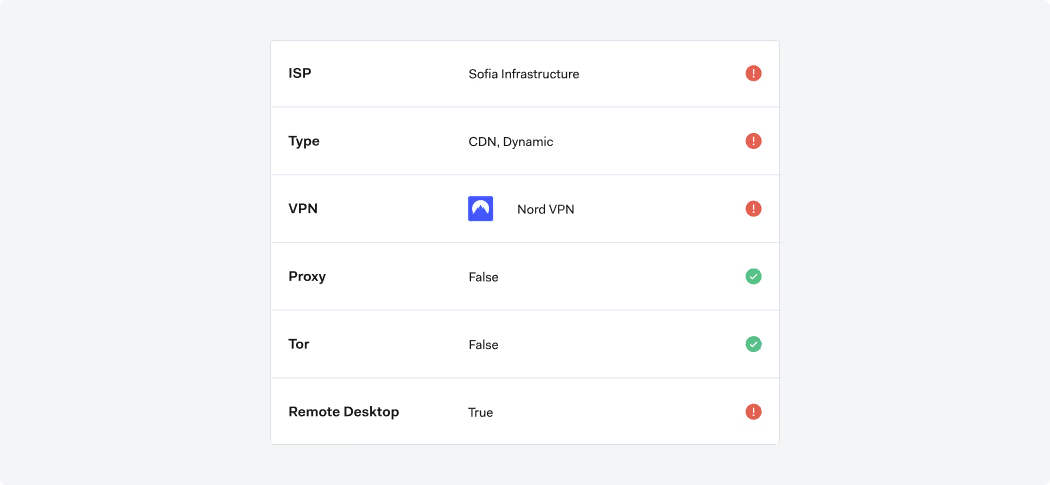
But an IP address provides more than just a location—it can reveal details on the exact timezone set for the address, its Internet Service Provider (ISP), connection type, and even blacklist history information. These insights, combined with other digital signals such as the presence of VPNs and proxies, help fintechs build a clearer profile of a user, assessing if their digital footprint aligns with the information provided.
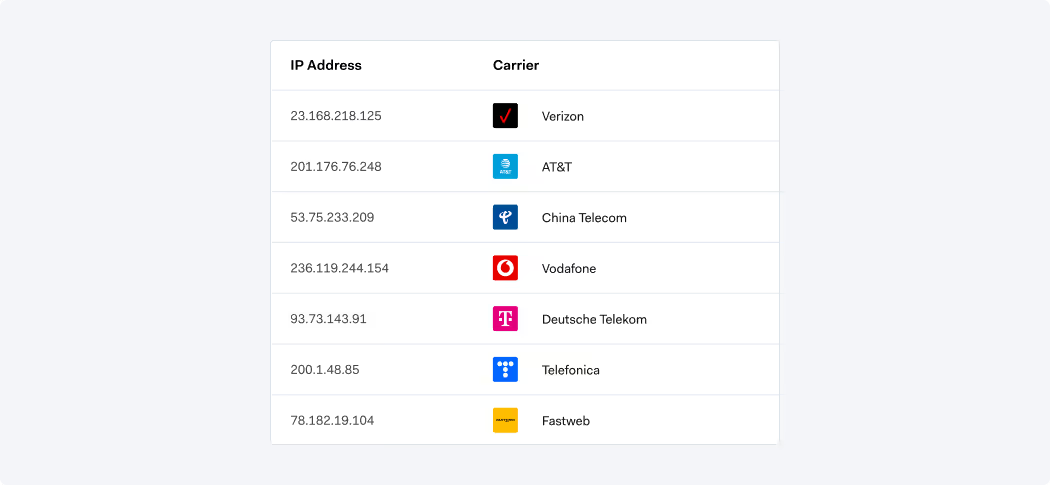
IP analysis also reveals mobile carrier information tied to an IP address, helping further verify user identity. Such details can be utilized to enrich user profiles, so fintechs can make more confident onboarding decisions and reduce the likelihood of allowing fraudulent accounts onto their platform.
Finally, IP analysis can also be used to enrich user data with company information, helping B2B Fintech providers introduce an additional layer of protection when onboarding business customers. IP analysis can in fact detect which companies are operating or leasing any specific IP block by using Autonomous System Numbers (ASNs) and WHOIS insights. By matching IP address blocks to specific companies, Fintech teams can unlock additional trust signals for business customers operating from a known corporate office.
.avif)
3 key benefits of IP address reverse lookup for Fintech onboarding
IP address reverse lookups provide fintech companies with essential data points that reinforce the security of their onboarding process, offering several distinct advantages. These include:
1. Enhanced user verification: IP reverse lookups allow fintechs to verify a user’s claimed location by cross-checking it with the actual location data tied to their IP address. This step can quickly identify mismatches between the user’s provided information and their digital footprint, flagging potential risks in the verification process.
2. Robust fraud prevention: reverse IP lookups can detect suspicious activity patterns, such as IP addresses associated with high-risk regions, anonymization tools, or multiple account creation attempts. By identifying these red flags early, fintech companies can prevent fraudsters from entering their platforms and protect their operations from potential threats, scams, and fraud attempts.
3. Seamless onboarding security: IP analysis helps fintechs filter out high-risk accounts before they complete onboarding, ensuring only legitimate users are allowed access. This adds an extra layer of security during sign-up, allowing companies to provide a seamless yet secure onboarding experience that safeguards their platform without creating unnecessary friction.
Using Trustfull’s IP analysis to improve digital onboarding
Trustfull’s IP analysis capabilities offer fintech companies a powerful resource for enhancing user verification and fraud detection during the onboarding process.
However, the most effective fraud prevention strategies don’t rely on IP address analysis in a vacuum, but they combine it with other digital signals, like email, phone, and browser intelligence. By integrating all of these checks, Trustfull offers a comprehensive view of potential risks. This approach helps detect inconsistencies that indicate fraudulent behavior, such as mismatches in IP geolocation and claimed location or phone number operator, or the use of anonymization tools and newly created email addresses.
Trustfull’s integrated approach to IP analysis ensures that fintechs maintain a secure, seamless onboarding experience for legitimate users.
To discover more about how to incorporate such defensive measures, please reach out to our team of fraud prevention experts.