Article
How to Use Reverse Email Lookup to Trace Fake Accounts

Uros Pavlovic
July 5, 2024
In today's world, emails serve as digital passports, underpinning communications across personal, professional, and commercial landscapes. The vast range of email use cases has increased the need for authenticating and verifying these digital identifiers. In this context, reverse email lookup emerges as an essential tool, enabling individuals and organizations to validate the authenticity of an email sender and effectively shield themselves against deceptive practices. This approach not only fortifies security but also enhances the trustworthiness of digital interactions, especially in business and financial contexts.
What is reverse email lookup?
Reverse email lookup is a process that allows users to enter an email address to uncover a wealth of information about the owner of that address. This method is crucial for validating identities, ensuring the credibility of communications, and safeguarding sensitive information. It's widely utilized across various domains, including fraud prevention, cybersecurity efforts, and enhancing personal safety, making it an indispensable tool of any digital security strategy.
How reverse email lookup works
The mechanics of reverse email lookups involve querying various relevant sources to retrieve data linked to an email address. These sources of information include public records, social networks, and other legally accessible databases to create a comprehensive profile that might include the user's full name, associated social media accounts, and more.
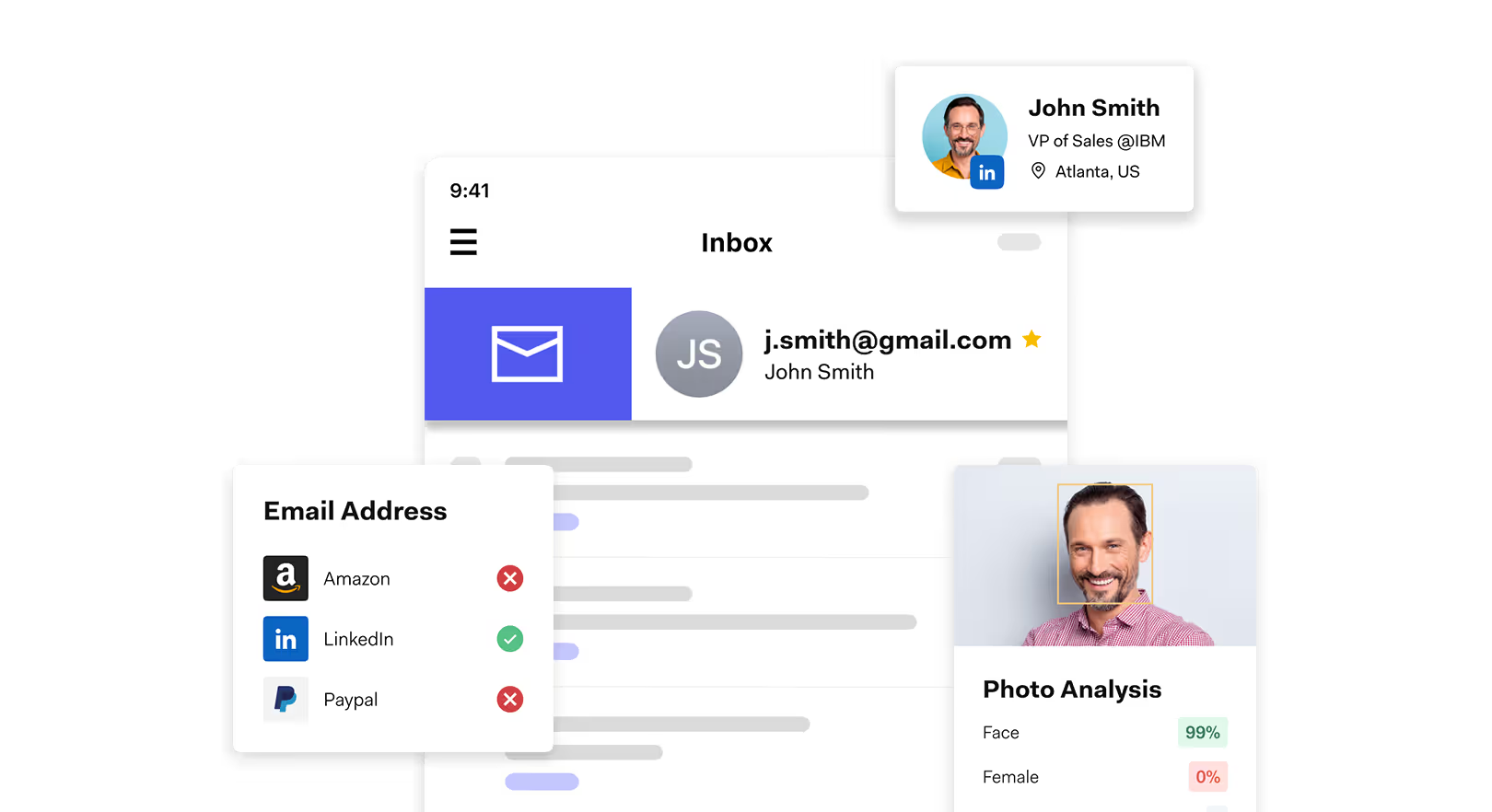
This lookup can reveal crucial insights, such as whether the email address is connected to a real person or a fabricated identity designed to deceive. For instance, a positive match between an email account and a number of corresponding social media profiles and premium accounts can confirm the legitimacy of an identity, whereas discrepancies or a lack of digital footprint might signal fraudulent intentions.
When equipped with the right tools, companies, especially financial organizations, can build a detailed user profile around an email address. For instance, an email address is usually connected to social networks, therefore it can reveal the email owner’s first name, last name, other social media accounts, and more.
These digital footprints can points toward fraud, but may also indicate low-risk profiles. Using them creates valuable data points that also be referred to as Open-Source Intelligence (OSINT). When using digital footprint analysis, certain signals can be positive or negative. In some cases, the results can sit somewhere in the middle. For example, should the email account image match certain social media account images, these signals are interpreted as positive. When the email image doesn’t match images from other accounts, there is a strong chance this signal is negative.
While different rules can apply to different industries, it must be noted that fraudsters usually use relatively similar methods to set up fake accounts to commit synthetic identity fraud. In short, they too are inclined to use recognizable patterns, which makes them easy to detect very early on, especially at the account opening stage.
Benefits of reverse email lookup
Email is constantly used by fraudsters to set up fake accounts, perform account take over fraud or similar online illicit behavior. During 2022 there were 300,497 phishing victims in the United States, amounting to a loss of $52,089,159 (Source: Forbes). Reverse email lookup serves as a critical component in the defense against online threats, particularly phishing and identity fraud. Verifying the authenticity of an email sender, individuals and organizations can prevent unauthorized access and protect sensitive information. This tool is especially valuable in identifying and blocking emails that might look legitimate at first glance but are actually part of sophisticated phishing schemes designed to steal personal data.
Streamlining account verification
For businesses, reverse email lookup is an invaluable asset for streamlining account verification processes. AI-driven email scoring and deliverability analysis can create opportunity for companies to efficiently validate email addresses during account creation or transaction processes. This not only speeds up the onboarding process but also significantly reduces the risk of fraudulent accounts, ensuring a secure and trustworthy customer base.
Spam detection
In addition to security enhancements, reverse email lookup can effectively aid in setting up robust spam detection systems. Gathered data linked to an email address is effectively analyzed, helping organizations to identify and eliminate fake or suspicious email addresses before they become a problem. This preemptive action helps maintain the integrity of communication channels and ensures that only genuine interactions reach users.
Enriching customer data
Reverse email lookup also enables businesses to perform thorough background checks and enhance customer relations through ML-powered data enrichment. This process involves associating an email address with detailed business information such as company size, industry, and revenue, along with DNS and domain analysis. Such enriched data allows companies to tailor their marketing and customer service strategies more effectively, fostering better relationships and driving business growth.
Reverse email lookup with Trustfull
Using Trustfull to perform a reverse email lookup is a straightforward process designed to provide comprehensive results. Users simply need to input the email address they wish to investigate into the platform. Trustfull then utilizes its advanced analytical tools to fetch and display a detailed report about the email address in question.
Unlocking the data
Once the reverse email lookup is initiated, the Trustfull platform provides an array of valuable data that goes beyond basic identity confirmation. This includes:
- Linked phone numbers: partial discovery of any phone numbers associated with the email address.
- Social media profiles: identification of linked social media accounts that can provide further insights into the email owner's digital presence.
- Risk flags: highlights of any potential risk signals associated with the email, such as non-existent business domains or dormant email accounts with limited usage history.
This detailed information helps users verify the identity of the email sender as well as understanding their broader digital footprint, enhancing decision-making processes in risk assessment and customer interactions.
Applying the insights
The insights gained from a reverse email lookup with Trustfull can be applied in various practical scenarios:
- Enhancing fraud protection: risk signals associated with an email address will improve fraud protection for companies, reducing the likelihood of fraud and increasing overall security.
- Reducing fake accounts: for platforms where identity verification is critical, the information from reverse email lookups can be used to weed out deceptive account registrations, maintaining a high-quality user base.
- Fast track high-quality new users: narrowing down risky new accounts instantly, teams can prioritize applicants and new users with a higher quality digital footprint to fast track qualification and approval.
Step-by-step email verification
To access Trustfull’s reverse email lookup feature, users must follow these simple steps:
- Log in to the Trustfull platform: enter your credentials to access your account.
Don't have an account yet? You can sign up for a free trial here. - Navigate to ‘Manual lookup’.
- Enter the email address: input the email address you want to check into the designated field.
- Initiate the search: start the lookup process, and results will appear after a few seconds.
Through its email insight capabilities, Trustfull simplifies the process of conducting reverse email lookups while ensuring that users can leverage the full potential of the data uncovered to secure and optimize their operations.
Going beyond email checks to unlock powerful risk scoring
Reverse email lookup is a powerful tool to protect any business against illicit online behavior and potential fraud. However, teams can take their risk management and fraud prevention strategies even with identity intelligence that combines email insights with additional data points.
Identity intelligence encompasses a methodical interpretation of a wider scope of digital signals, collected from numerous sources, including:
- Phone number intelligence - detect apps, social media accounts, porting history, current MNO, disposable number, etc.
- IP address data - focus on IP geolocation and proxy detection, VPN detection, Tor connections.
It’s possible to expand the process of digital footprint analysis even further. Apart from IP and Phone Number data, even more signals can be accessed by utilizing device detection and browser fingerprinting.
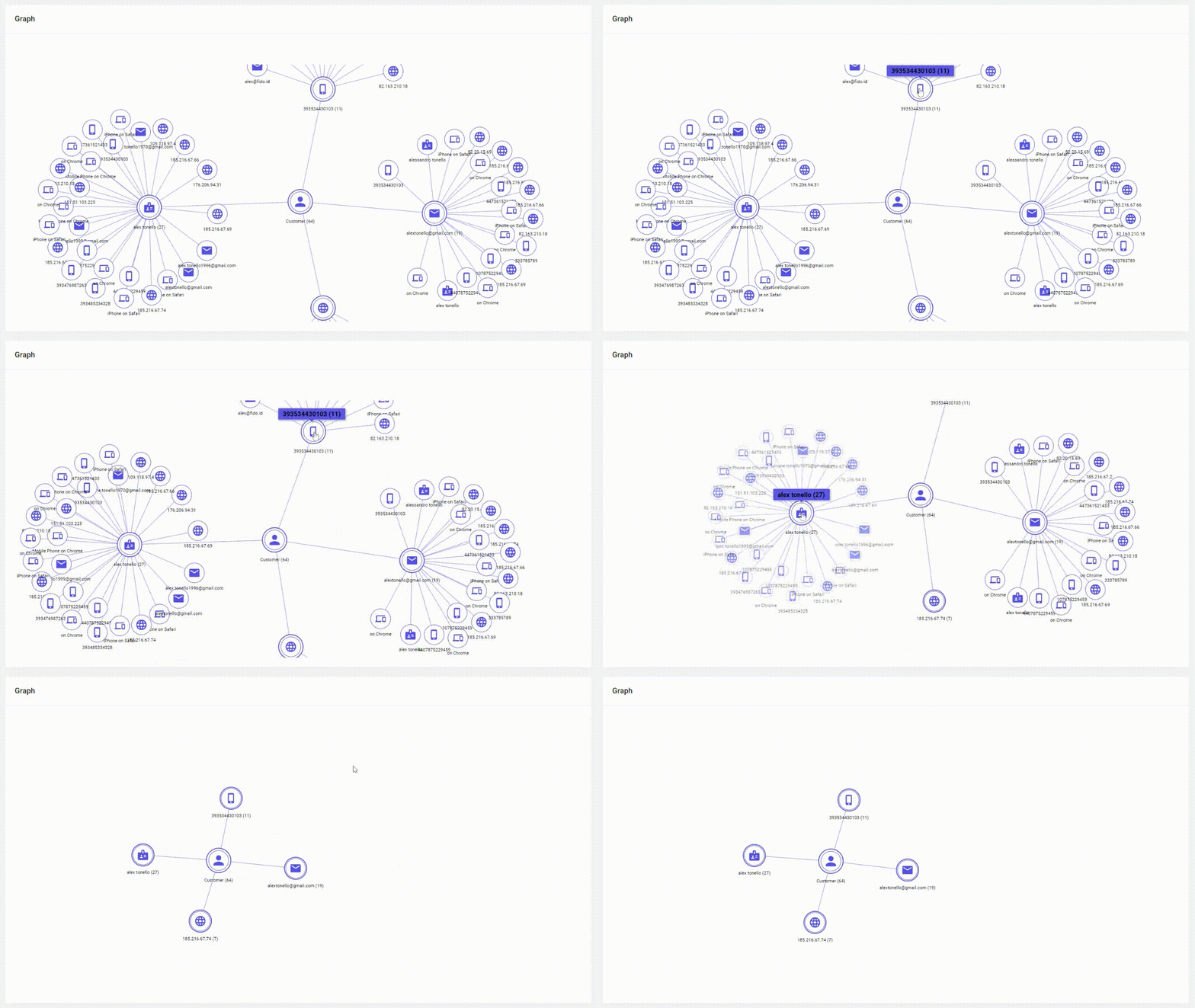
Combined signals pinpoint suspicious user behavior and unlock deeper insights and a richer method of risk scoring. Such identity intelligence helps unveil the path of the fraudster, allowing financial organizations, fintech companies, and similar businesses to immediately recognize synthetic identity patterns.
To successfully utilize all the features above and more, you can reach out to our team of fraud experts.
Questions and Answers on Reverse Email Lookup
What information is typically uncovered by a reverse email lookup?
A reverse email lookup can uncover a variety of information, including the owner's full name, linked phone numbers, social media profiles, associated businesses, and any potential risk flags. This comprehensive profile helps in verifying the authenticity and credibility of the email sender, thereby enhancing security and trust in digital interactions.
How accurate is reverse email lookup?
Reverse email lookup accuracy largely depends on the quality of the data sources used and the technology implemented to analyze the data. Trustfull’s platform utilizes comprehensive, up-to-date databases and advanced analytical tools, ensuring high accuracy in identifying and verifying email-related information.
How can reverse email lookup be used in client onboarding processes?
Reverse email lookup can significantly streamline client onboarding processes by validating email addresses during account creation. AI-driven email scoring and deliverability analysis quickly identifies and filters out fraudulent or suspicious accounts, ensuring a secure and trustworthy customer base. This not only accelerates the digital onboarding process but also enhances overall security and reduces the risk of fraudulent activities.