Article
What is Authorized Push Payment (APP) Fraud?

Uros Pavlovic
February 29, 2024
Digital transactions dominate today’s financial landscape, but with this convenience comes a growing threat: authorized push payment (APP) fraud.
Spotting and blocking financial transactions authorized as a result of social engineering, manipulation or other forms of deception is a growing challenge for financial institutions all over the world. The subtleties of APP fraud are sometimes hard to detect, but fraud & compliance teams can implement effective prevention strategies and technologies to protect their customers against this rising risk.
The definition of authorized push payment fraud
Authorized push payment fraud, or APP fraud, is a sophisticated scam where fraudsters deceive individuals or representatives of businesses into sending money directly to accounts under the control of criminals. This scam differs from traditional fraud methods as the fraudulent transaction is always initiated by the rightful owner of the account, making detection and prevention particularly challenging. The fraud typically involves social engineering tactics, where fraudsters impersonate legitimate entities, such as bank officials, government agencies, or known business partners.
What are the phases of APP fraud?
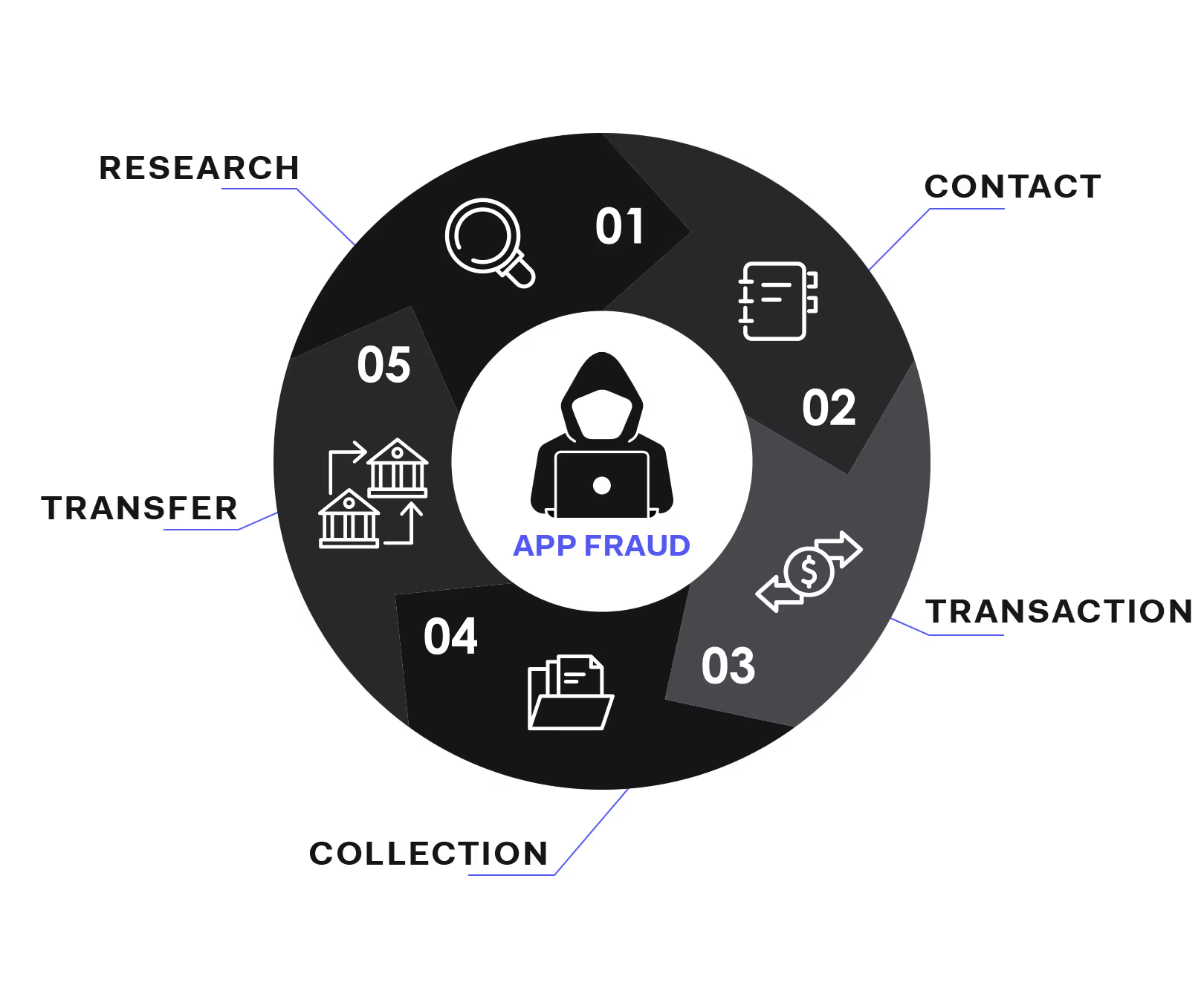
While there are different types of authorized push payment fraud, in most cases these scams involve a fraudster deceiving an unsuspecting victim into authorizing a payment to a seemingly legitimate person or entity for what appears to be a legitimate reason.
Below are the typical phases of most forms of APP fraud:
- The scam artist researches their target to gather personal data or information that can be exploited in their scheme.
- The scammer contacts the target, making a payment request while falsely presenting their identity, the purpose of the payment, or even posing as other individuals or organizations.
- The target, deceived by the scammer's tactics, approves the transaction, executing the payment personally.
- The scam artist collects the payment, which cannot be reversed once completed.
- Subsequently, the scammer usually transfers the funds out of the account to prevent the victim or financial institution from retrieving them following an investigation.
The rise of APP fraud
The digital age has seen a significant increase in APP fraud, often referred to simply as 'app fraud'.
At the end of 2023, it was reported that authorized push payment (APP) fraud rose by 22% compared to the same period in 2022. APP doesn’t just include investment frauds found on search engines and social media, it also involves romance scams via online dating platforms and purchase rackets hosted on social media and auction websites.
This rise can be attributed to the vast digitalization of banking and payment systems, offering fraudsters new avenues to exploit. As transactions become more frequent and diverse, the opportunities for app fraud have expanded, necessitating advanced solutions for its detection and prevention.
Recipient and beneficiary analysis: key to prevention
A crucial step in combating APP fraud is thorough recipient analysis, also known as beneficiary analysis. This process involves scrutinizing the details of the transaction recipient to verify their legitimacy before the transaction is authorized by the financial institution. It requires a deep dive into the digital signals associated with the recipient, such as phone numbers and email addresses. When these signals are interpreted it's possible to detect anomalies or patterns indicative of fraudulent activity. Additionally, these checks can be used to alert unsuspecting victims that the recipient of their money transfer may not be who they claim to be.
Best practices for preventing APP fraud
To set up a strong protection strategy against Authorized Push Payment (APP) fraud, it is vital to utilize a number of known best practices, thus fortifying defenses, enhancing detection capabilities, and ensuring a robust security posture for organizations across various sectors. Here are some of these best practices:
- Educate: awareness is the first line of defense against APP fraud. Businesses and their employees should be educated about the nature of these scams, including common tactics used by fraudsters. Regular training sessions can help keep everyone informed about the latest fraud trends and prevention strategies.
- Implement advanced verification processes: utilize advanced technologies for recipient analysis before authorizing transactions. This includes verifying the legitimacy of the recipient through digital signal analysis and machine learning-based assessments. Recipient analysis also entails examining a wide variety of trust and risk signals.
- Enhance internal security measures: strengthen internal security protocols to safeguard against APP fraud. This involves implementing multi-factor authentication, setting transaction limits, and continuously monitoring for suspicious activities.
- Collaborate with financial institutions: work closely with banks and financial institutions to leverage their fraud prevention tools and resources. Many institutions offer services designed to flag unusual transactions or provide additional layers of security for transfers.
- Adopt a comprehensive fraud prevention strategy: combining technology-driven solutions with strong internal processes and education creates a comprehensive defense mechanism against APP fraud. Our platform integrates seamlessly with existing systems to enhance fraud detection capabilities without disrupting user experience.
Industry-specific responses to authorized push payment fraud
The digital era has ushered in unprecedented levels of convenience and efficiency across various sectors. However, this transformation has also introduced new vulnerabilities, particularly in the realm of financial transactions. Authorized push payment fraud has emerged as a formidable challenge, exploiting these vulnerabilities with devastating effectiveness. The nature and impact of APP fraud vary significantly across industries, necessitating tailored strategies for effective prevention and mitigation.
Fintech: innovating for enhanced security
In the fintech sector, the rapid evolution of technology and the increasing sophistication of cyber threats have made APP fraud a moving target. Fintech companies are at the forefront of this battle, leveraging cutting-edge technologies such as behavioral biometrics and real-time transaction analysis. These tools analyze patterns in user behavior and transaction data to identify anomalies that may indicate fraudulent activity. By implementing multi-factor authentication (MFA) and customer education programs, fintech firms are strengthening the weakest link in the security chain: the end-users themselves.
Banking: fortifying trust through vigilance
Banks have traditionally been the primary targets of APP fraud, given their central role in managing personal and corporate finances. To combat this, many banks have adopted a layered security approach that combines technological solutions with stringent regulatory compliance. Advanced algorithms that monitor transaction velocity and recipient analysis are deployed to flag unusual transactions. Furthermore, banks are investing in public awareness campaigns to educate their customers about the risks of APP fraud and the importance of verifying payment requests. But that’s not all, banks are adopting new solutions and tech that prevented a further £651 million of unauthorized fraud from being stolen through advanced security systems. Unlocking valuable insights and identity intelligence through digital footprint analysis is one of the technologies that reinforce such security systems.
Online retail: safeguarding transactions in the e-commerce ecosystem
The online retail industry faces unique challenges related to APP fraud, particularly around the holiday season when transaction volumes surge. Retailers are integrating sophisticated fraud detection systems that analyze purchase behavior, device fingerprinting, and IP address verification to identify suspicious transactions. By requiring additional verification for high-value purchases and implementing secure payment gateways, e-commerce platforms are minimizing the risk of APP fraud. Additionally, collaboration with payment processors and financial institutions is essential for sharing intelligence and best practices.
Outmaneuvering the threat
Across all industries, the fight against APP fraud requires a multifaceted approach that balances technological innovation with human insight. Industry-specific challenges demand tailored solutions, yet the underlying strategies share common themes: enhancing detection capabilities, fostering customer education, and promoting collaboration among stakeholders.
As APP fraud continues to evolve, so too must the defenses against it. The unique vulnerabilities and threats within each industry can be interpreted so that businesses can develop more effective strategies to protect themselves and their customers from this growing menace. The ongoing battle against APP fraud underscores the importance of vigilance, innovation, and cooperation in securing the financial ecosystem against sophisticated threats.
Technology's vanguard in APP fraud prevention
In the escalating battle against Authorized Push Payment (APP) fraud, technology emerges as the linchpin, offering innovative and dynamic defenses. The incorporation of Machine Learning (ML) and Artificial Intelligence (AI) has revolutionized the approach to detecting and preventing APP fraud, providing a robust shield that is as adaptable as the threats it faces.
The AI and ML Paradigm
At the heart of modern fraud prevention strategies, AI and ML algorithms sift through vast datasets to identify patterns and anomalies indicative of fraudulent activity. These technologies excel in their ability to learn and adapt over time, refining their accuracy with each transaction they analyze. For financial institutions, fintech firms, and online merchants, this means a continuously improving defense mechanism that can anticipate and counteract evolving fraud tactics.
Nowadays, leading global banks implement an AI-driven system that analyzes transaction data in real-time, comparing it against historical patterns of fraud. This system successfully flagged and prevented a significant number of fraudulent transactions, saving millions in potential losses.
Beyond detection: predictive capabilities
The true power of AI and ML in combating APP fraud lies in their predictive capabilities. Recognizing trends and patterns is essential because they help forecast potential threats before they materialize, allowing organizations to proactively adjust their defense strategies. This forward-looking approach not only mitigates the risk of fraud but also enhances customer trust and security.
Integrating AI and ML: challenges and considerations
While the potential of AI and ML in APP fraud prevention is immense, their integration is not without challenges. Concerns regarding data privacy, regulatory compliance, and the need for significant computational resources must be addressed. Moreover, the sophistication of these systems requires ongoing maintenance and tuning to ensure their efficacy.
The path forward
As APP fraud continues to evolve, so too must the technologies designed to combat it. The future of fraud prevention will likely see even greater integration of AI and ML, along with other emerging technologies such as blockchain and biometrics. These advancements promise to further enhance the ability of businesses and financial institutions to protect their operations and their customers against the scourge of APP fraud. For example, the appearance of synthetic identities is a growing problem in the modern-day financial world, and AI-powered image analysis can help reduce fraud significantly.
The deployment of AI and ML in the fight against APP fraud represents a critical step forward in securing digital transactions.
The impact of APP fraud
The landscape of authorized push payment (APP) fraud has undergone significant transformation over the years, mirroring the rapid advancements in technology and the evolving behaviors of both consumers and fraudsters. Initially, APP fraud cases were relatively straightforward, often involving simple scams that targeted individuals. However, as digital banking and online transactions have become ubiquitous, the complexity and scale of APP fraud have escalated.
The financial toll: a global perspective
The financial impact of APP fraud has been staggering, with billions of dollars lost annually worldwide. In the UK alone, the Financial Conduct Authority (FCA) reported losses amounting to hundreds of millions of pounds each year, marking a concerning upward trend. Similar patterns have been observed globally, with financial institutions, businesses, and consumers bearing the brunt of these sophisticated scams.
The response: regulation and collaboration
In response to the growing threat of APP fraud, regulatory bodies, and financial institutions have begun to collaborate more closely. Initiatives such as the introduction of the Confirmation of Payee (CoP) system in the UK aim to add an extra layer of security by verifying the recipient's details before a transaction is completed. Moreover, global efforts to enhance information sharing and implement more robust verification processes have been instrumental in the fight against APP fraud.
What’s on the horizon
As we look to the future, the battle against APP fraud will undoubtedly continue to evolve. With fraudsters constantly adapting their tactics to circumvent new security measures, the importance of ongoing vigilance, technological innovation, and consumer education cannot be overstated. The financial industry's commitment to investing in advanced detection tools and fostering a culture of security will be key to mitigating the impact of APP fraud in the years to come.
Fincrime prevention: a winning battle
The threat posed by authorized push payment fraud is both real and evolving, demanding a proactive and technology-driven approach to prevention.
Our identity intelligence platform embodies this approach, offering a sophisticated solution for navigating the complexities of APP fraud prevention. In doing so, we not only protect the integrity of financial transactions but also contribute to the broader effort of creating a safer digital world for all.
Feel free to contact our team of anti-fraud experts to learn more.