Article
What is Fraud as a Service?

Uros Pavlovic
March 22, 2024
Online fraud is becoming an increasing challenge for many businesses. Fraudsters and scammers are utilizing methods designed to exploit every conceivable vulnerability. "Fraud as a Service" (FaaS) is a well-known example and it denotes fraudsters commercializing their methods to breach security measures. This phenomenon not only undermines trust in the digital market but also poses a giant threat to the integrity of financial systems and personal data privacy worldwide.
The rise of Fraud as a Service (FaaS)
Before we go any further, let’s define the term ‘Fraud as a Service’ and examine how it has reshaped the world of cybercrime. Understanding the roots and proliferation of FaaS can open the door to new measures that would help companies defend against it.
Definition and evolution of FaaS
Fraud as a Service is a subset of cybercrime where the tools and services used for fraud are offered on a subscription or pay-per-use basis. As scary as this sounds, the model mirrors legitimate software-as-a-service (SaaS) businesses, in addition to a nefarious twist: it allows criminals to unlock accessible means so they can commit fraud. The evolution of FaaS is a testament to the dark adaptability of cybercrime, with services ranging from phishing kits and ransomware to more sophisticated tools for identity theft and financial fraud.
How FaaS operates within the dark web
The dark web serves as the primary marketplace for FaaS, operating beyond the reach of conventional search engines and requiring specific software for access. Here, anonymity tools and encrypted payment systems facilitate the buying, selling, and trading of illegal services without leaving a trace. This shadowy part of the Internet harbors forums and marketplaces where users can procure everything needed to initiate a wide array of cyber attacks or fraud schemes, often accompanied by customer support and user reviews to ensure "customer satisfaction."
The impact of FaaS on businesses and the economy
The ramifications of FaaS extend far beyond individual victims to affect businesses and the broader economy. Companies face direct financial losses from fraudulent transactions, not to mention the costs associated with tightening security measures and restoring consumer confidence in the aftermath of an attack. The broader economic impact includes increased costs for goods and services, as businesses often pass on the costs of fraud prevention to consumers. Furthermore, the pervasive nature of FaaS slowly decreases trust in digital transactions, potentially stifling innovation and hindering the growth of e-commerce and online services critical to modern economies.
However, online fraud in general remains a continuously growing occurrence. During Q2 2023, over 30,000 consumer fraud cases were reported in the United Kingdom alone. Additionally, cumulative losses in online payments due to fraud are forecast to amount to $343 billion for merchants between 2023 and 2027. Another devastating example comes from Europol, which has reported over EUR 100 million in losses due to money muling.
As we maneuver through the complexities of online fraud, it’s essential to underscore the importance of deploying sophisticated fraud detection and prevention strategies. The next step is clarity: in other words, businesses need to stay well-informed, because online fraud comes in many different forms.
Key types of online fraud
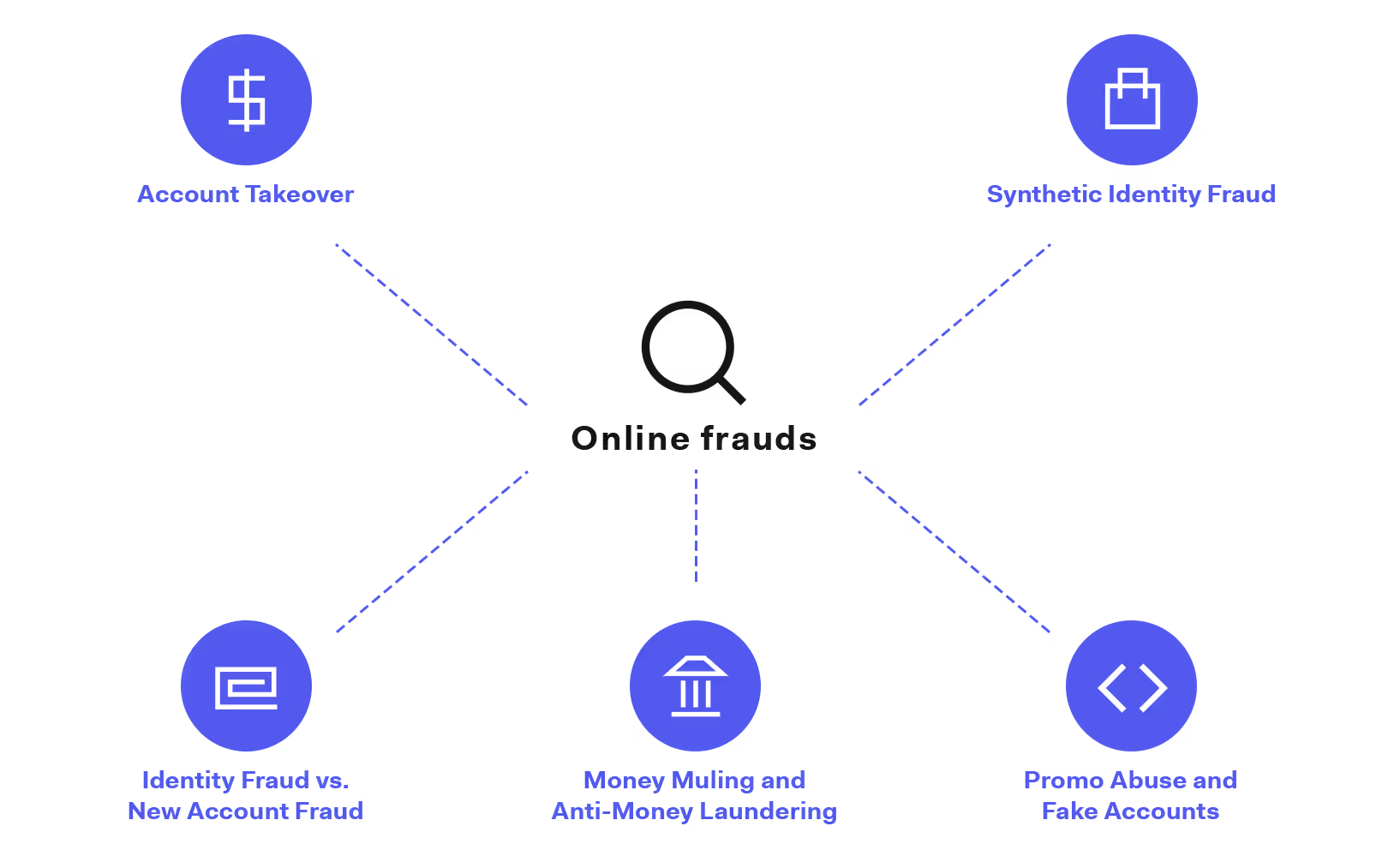
Fraudsters leverage a variety of tactics to exploit both individuals and organizations. Understanding the key types of fraud prevalent today is the first step toward crafting effective defenses.
Account Takeover: This type of fraud occurs when a fraudster gains unauthorized access to a user's accounts, such as banking, email, or social media (other account services are included such as Amazon, Netflix, Apple, etc.). The fraudster can then initiate transactions, steal sensitive information, or perpetrate other fraudulent activities posing as a legitimate account owner. Account takeover often results from phishing attacks, malware, or the exploitation of weak passwords, underscoring the need for robust authentication processes.
Synthetic Identity Fraud: Here, fraudsters create new identities by combining real and fabricated information, or entirely fictitious data, to open fraudulent accounts and obtain credit. This complex form of identity fraud is particularly challenging to detect since it doesn't directly victimize individuals but exploits the systems of credit and financial institutions, leading to significant losses. While this paints a grim picture, it doesn’t mean there is no way to stop it. Synthetic identity fraud can be reduced with strategically placed detection methods.
Identity Fraud vs. New Account Fraud: While identity fraud involves the unauthorized use of another person's identity to conduct fraudulent transactions, new account fraud takes it a step further by opening new accounts with stolen identities. Both types severely impact credit scores and personal finance, and they require sophisticated detection tools to identify inconsistencies and anomalies in application processes.
Money Muling and Anti-Money Laundering: Money mules are individuals or entities used to transport and launder stolen funds or goods. This facet of financial fraud is integral to the operation of criminal networks, necessitating advanced analytical tools for detection and prevention. Anti-money laundering (AML) measures aim to combat these tactics, but they are constantly tested by the evolving methods of fraudsters.
Promo Abuse and Fake Accounts: Businesses often become victims of fraud through the abuse of promotional offers and the creation of fake accounts. Fraudsters exploit these for financial gain or to artificially inflate user numbers, impacting business analytics and financial planning. Detecting such abuse requires a nuanced understanding of normal user behavior versus patterns indicative of fraudulent activity.
Navigating the multifaceted realm of online fraud demands a comprehensive approach, combining awareness of these fraudulent practices with the deployment of cutting-edge technological solutions. As we delve deeper into the significance of digital signals and machine learning in combating these threats, it becomes clear that proactive measures are not just beneficial but essential for maintaining security and trust in the digital landscape.
Recognizing fraudsters via digital signals
Fighting online fraud gets more challenging every year. In that regard, digital signals offer a way out for businesses. These alternative digital signals—encompassing phone, email, IP address, browser characteristics, and device data—are critical tools in deciphering the authenticity of online actions. By analyzing these signals, machine learning algorithms can uncover patterns and anomalies indicative of fraudulent behavior, long before a human analyst might notice.
The power of machine learning lies in its ability to learn from vast datasets, adapting and improving over time to recognize new and evolving fraud tactics. When a digital signal deviates from known patterns—for instance, an IP address from a high-risk location or a device with suspicious attributes—the system flags these activities for further investigation. This preemptive approach enables businesses to stop fraudsters in their tracks, effectively protecting financial assets.
Fraud prevention in action: use cases

Account Opening Protection: The initial step of opening an account is fraught with opportunities for fraudsters to exploit. By verifying digital signals at this critical juncture, businesses can ensure that new accounts are being opened by legitimate users, not fraudsters aiming to create synthetic identities or commit credit fraud.
Onboarding Protection: During the onboarding process, analyzing behavioral patterns and digital signals helps distinguish genuine users from malicious actors. This step is crucial for industries such as fintech and banking, where establishing trust from the outset is paramount.
Signup and Identity Verification: At the point of signup, verifying the identity of users through digital signals can prevent unauthorized access and account takeover. This verification process is vital across sectors, ensuring that transactions and interactions are secure from the start.
Lead Verification: For businesses, separating genuine leads from fraudulent ones is essential for operational efficiency and financial health. By analyzing digital signals, companies can identify and focus on engaging with real potential customers, avoiding the pitfalls of promo abuse and fake account creation.
Sector-specific challenges and solutions
The digital age, while heralding unparalleled convenience and connectivity, has also introduced unique challenges for different sectors. The nature and scope of online fraud vary significantly across industries, necessitating tailored approaches to defense and prevention. Here, we explore how specific sectors confront and mitigate the risks of online fraud.
Fintech and banking: the financial sector, at the heart of digital transactions, is particularly vulnerable to a broad spectrum of fraudulent activities, from identity theft to complex money laundering schemes. Fintech companies and banks leverage advanced encryption, behavioral biometrics, and transaction monitoring systems to detect and prevent fraud. Emphasizing multi-factor authentication and customer education about phishing and other scams are also crucial in these industries.
Cryptocurrency: the burgeoning field of cryptocurrency presents a novel set of challenges, given the anonymity and lack of regulation inherent in these digital currencies. Fraudulent ICOs (Initial Coin Offerings), wallet theft, and exchange hacks are prevalent risks. Solutions include implementing robust security protocols, cold storage for funds, and smart contract audits to ensure transaction integrity and protect against fraud.
Online gambling: this sector faces risks from bonus abuse, multi-accounting, and collusion among players. Online gambling platforms utilize KYC (Know Your Customer) checks, machine learning algorithms to analyze betting patterns, and IP geolocation to combat these issues. Ensuring compliance with regulatory standards and promoting responsible gambling are also integral to maintaining a secure online environment.
Each of these sectors, while facing distinct challenges, benefits from the strategic application of digital signal analysis and machine learning in fraud prevention efforts.
Fraud detection and prevention
As we have explored, the fight against fraud is complex and challenging. It requires a combination of fraud prevention methods, so businesses and individuals can stand up to an array of online fraud types.
Another important aspect of fraud prevention is adaptability. The adaptability of fraud detection tech equips companies to combat various evolving methods of fraud.
To explore more about how to combat fraud, including the phenomenon of ‘fraud as a service’, feel free to contact our team of AML and anti-fraud experts.