Article
How Email Age Unmasks New Account Fraudsters

Uros Pavlovic
July 12, 2024
In the ongoing battle against online fraud, businesses are constantly seeking innovative ways to verify user identities and protect their platforms. One often overlooked yet powerful strategy in this arsenal is checking email age. This seemingly simple piece of information can provide key insights into the legitimacy of a user account, serving as a silent sentinel in the fight against fraudsters. As digital transactions continue to dominate the business landscape, understanding and leveraging email age has become an essential component of reliable fraud detection strategies.
What is email age?
Email age refers to the length of time an email address has been in existence since its creation. This temporal metric offers valuable context about the digital footprint of a user, providing a window into their online history and potential legitimacy.
Email age is calculated from the moment an email address is registered with a service provider. It encompasses the entire lifespan of the address, including periods of activity and inactivity. Advanced fraud prevention systems can often determine this age with remarkable accuracy, drawing from vast databases and sophisticated algorithms.
How can email age be used for fraud prevention?
The importance of email age in fraud prevention cannot be overstated. For businesses, particularly those operating in high-risk sectors, email age serves as a critical trust signal. Here's why:
- Fraud pattern recognition: newly created email addresses are often associated with higher fraud risk. Fraudsters frequently generate new email accounts to circumvent detection systems and carry out their schemes.
- Identity verification: long-standing email addresses are more likely to belong to legitimate users who have established digital presences over time.
- Risk assessment: email age can be a key factor in determining the risk level of a new account or transaction, allowing businesses to adjust their verification processes accordingly.
- Cost-effective screening: analyzing email age is a non-intrusive and cost-effective method of identity pre-screening, potentially reducing the need for more expensive and time-consuming verification steps on fraudulent accounts down the line.
- Enhanced customer experience: for legitimate users with established email addresses, the email age check can contribute to a smoother, faster onboarding process.
Email age analysis adds a strong layer of protection against new account fraud. This method allows companies to make user authenticity, balancing security needs with customer experience in an increasingly digital world.
Email age and fraud risk: by the numbers
The impact of email-based fraud on businesses is staggering, with financial losses and reputational damage reaching alarming levels. Recent studies have shed light on the scale of this problem, emphasizing the critical need for robust email verification methods, including email age checks.
During 2022 around 85% of companies worldwide experienced at least some form of email fraud, including phishing and fake accounts. Major businesses such as PayPal have disclosed that they discovered 4.5 million illegitimate accounts within their database.
These figures underscore the urgent need for businesses to implement comprehensive email verification strategies, with email age serving as an essential component in the fight against fraudulent activities.
The role of email age within the context of email checks for fraud prevention
As businesses strive to protect themselves against increasingly sophisticated fraud attempts, email checks have become an indispensable tool in their arsenal. As a critical component of these checks, email age plays a pivotal role in enhancing fraud prevention strategies.
What are email checks?
Email checks are a series of verifications performed on an email address to determine its validity, authenticity, and potential risk level. These checks go beyond simply confirming that an email address is properly formatted; they delve into various aspects of the email's history and characteristics to provide a comprehensive risk assessment.
How does email verification work?
Email verification is a multi-step process that combines various techniques to validate an email address:
- Syntax check: ensures the email address is correctly formatted.
- Domain check: verifies that the email's domain exists and is active.
- Mailbox check: confirms the specific email address exists on the domain.
- Reputation analysis: assesses the email address's history and associated risk factors.
Email age verification, specifically, involves cross-referencing the email address against extensive databases and using advanced algorithms to estimate its creation date and subsequent activity timeline.
Industries benefiting from email verification
Email verification, including age checks, is vital for industries that face high risks of fraud:
- Financial services and fintech: these sectors handle sensitive financial transactions and require stringent identity verification to prevent money laundering and account takeover attempts.
- Online gambling and betting: the high-stakes nature of these industries makes them prime targets for fraudsters, necessitating robust email verification to ensure user authenticity.
- Cryptocurrency platforms: with the anonymity often associated with crypto transactions, verifying user identities through email checks is integral for regulatory compliance and fraud prevention.
- Digital lending and insurance: these industries rely heavily on accurate user information to assess risk and prevent fraudulent claims or loan applications.
- Online marketplaces: Large-scale platforms need to protect both buyers and sellers from fraudulent activities, making email verification an essential part of user onboarding.
Using email age checks for verification processes helps companies from these industries to focus on user legitimacy, allowing businesses to make more informed decisions about account approvals, transaction authorizations, and overall risk management.
Key email signals for fraud detection
Email age is one of several email signals playing an important role in identifying potential risks. These signals, when analyzed collectively, provide a comprehensive view of an email address's credibility and the likelihood of it being associated with fraudulent activities.
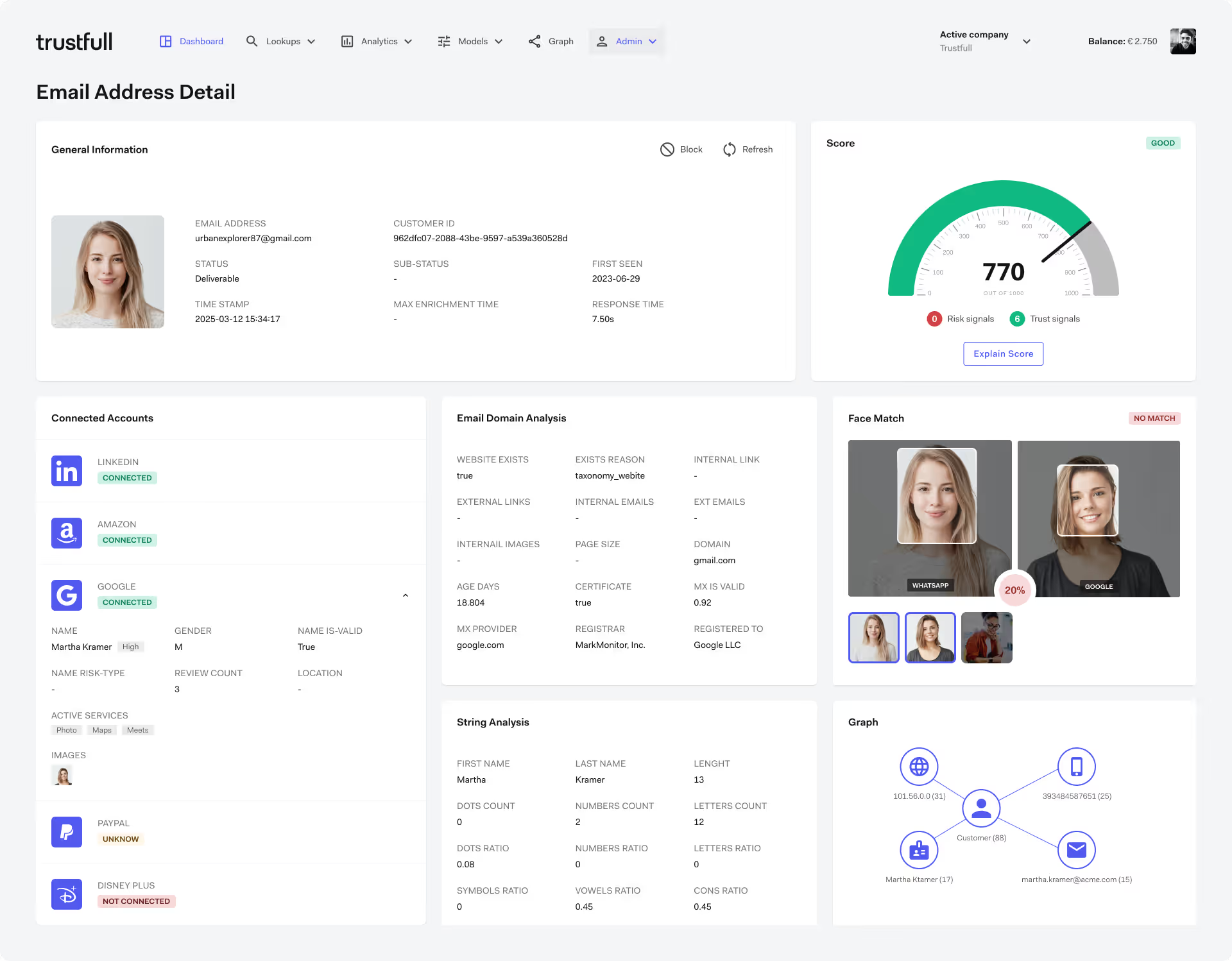
Domain age and reputation
The age and reputation of an email domain can offer valuable insights into its legitimacy. Established domains with good reputations are less likely to be associated with fraudulent activities compared to newly created or less reputable domains.
Email activity patterns
Analyzing the patterns of email usage can reveal suspicious behavior. Unusual spikes in activity, irregular login times, or sudden changes in communication patterns may indicate potential fraud attempts.
Associated accounts and services
Examining the various accounts and services linked to an email address can provide a broader picture of its authenticity. Legitimate users often have multiple, longstanding associations across various platforms.
First_seen signal
A recently launched feature in our advanced email and phone verification APIs is the first_seen signal. This innovative tool calculates the earliest recorded date of an email address or phone number across various data sources. Currently, the first_seen signal draws information from:
- First data breach: earliest known instance of the email appearing in a data breach.
- First ported: the first time a phone number was transferred between carriers.
- First appearance: tracking when the email or phone number was first encountered within the broader user network.
The first_seen signal is particularly valuable in determining whether an email address or phone number has an established history, thereby creating a powerful risk/trust signal.
These email signals, especially when used in conjunction with other fraud prevention measures, form a robust defense against new account fraud and other malicious activities. Businesses can utilize these digital to determine the trustworthiness of new accounts, significantly reducing their exposure to potential fraud risks.
Streamlined roadmap to safer silent onboarding
Email age has emerged as a powerful tool in the prevention of new account fraud, offering businesses a non-intrusive yet effective means of assessing user authenticity. Additionally, companies can also utilize reverse email lookup - entering an email address to uncover an even greater wealth of information.
These methods are crucial for validating identities, ensuring the credibility of communications, and safeguarding sensitive information. It's widely utilized across various domains, including fraud prevention, cybersecurity efforts, and enhancing personal safety, making it an indispensable tool of any digital security strategy.
However, email age is just one piece of the puzzle. A truly effective fraud prevention strategy incorporates a range of signals and data points, from phone number intelligence to IP address analysis and device detection. Merging all these elements creates more opportunities for organizations to fight sophisticated fraud attempts.
Discover how Banca Sella enhanced fraud prevention defenses with fast and accurate/ email checks.
Read the full story

As we look to the future of fraud prevention in silent onboarding, the key lies in balancing security with user experience. Advanced technologies like machine learning and AI will play an increasingly important role, allowing for more accurate risk assessments and adaptive fraud detection models.
To explore and understand the process of silent onboarding and other AI-powered defenses, feel free to reach out to our team of fraud experts.