News
What-if Analysis: Enhancing Fraud Prevention with Predictive Scenarios

Trustfull
August 22, 2024
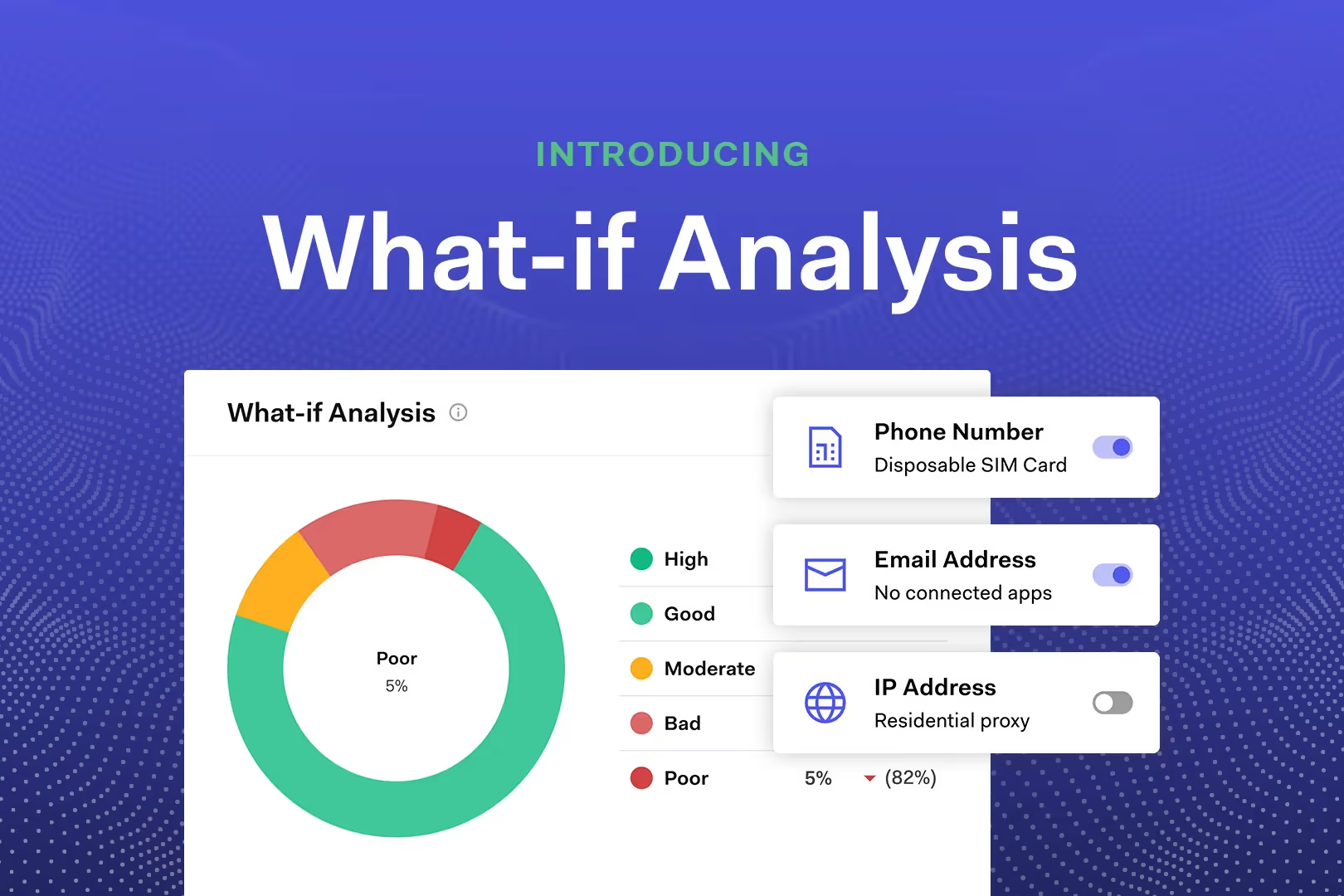
Striking the right balance between stopping fraud attempts and minimizing false positives is a challenge every company faces. No business wants to be vulnerable to fraud, but rejecting too many legitimate customers, logins, or transactions due to false positives can also cost valuable revenue.
Trustfull’s rule engine, released earlier this year, enables teams to create personalized risk scoring rules in seconds, without having to write a single line of code. This helps companies tailor their scoring methodology to their industry’s and business’s specific goals.
Now, we’ve enhanced our rule engine with a new feature that takes fraud prevention one step further: What-if Analysis.
What-if Analysis allows users to simulate the impact of changes to their existing risk models—before they’re implemented live.
What-if Analysis, explained
Within the What-if Analysis section, historic risk scoring data is used to instantly show how changing certain rules would have affected the same users’ risk scores—whether it means catching more fraudsters or improving the approval rate for genuine account holders who want to use your services.
This feature is more than just a simulation; it’s a strategic resource that lets businesses test and refine their fraud prevention strategies without the risk of affecting live sign-ups, logins or transactions, and as such potential revenue. The ability to backtest and predict the distribution of risk clusters ensures that companies can confidently adjust their models, aligning them more closely with their risk appetite and operational goals.
Key applications and benefits
Risk model backtesting
The primary benefit of the What-if Analysis feature is the ability to finetune existing risk models. By leveraging historical data from previous customers, businesses can simulate changes to their custom risk models and observe the potential impact on risk scores. This allows them to evaluate how different configurations would have classified customers across risk categories—such as bad, poor, moderate, and good. The ability to predict these outcomes provides a clear understanding of how small adjustments in the model’s parameters could have altered past decisions, helping businesses refine their strategies before implementing them in a live environment.
Optimizing approval rates
A crucial advantage of the What-if Analysis feature is its role in optimizing fraud prevention strategies. By simulating various scenarios, companies can strike the right balance between blocking fraudulent activities and maintaining a healthy approval rate for authentic customers. This feature allows businesses to test assumptions about specific risk and trust signals without the pressure of real-time decision-making. For example, if a particular rule is too stringent, it might lead to the rejection of too many valid customers. With our What-if Analysis, companies can experiment with these rules and find the optimal settings that align with their risk appetite, ensuring that they are neither too lenient nor overly restrictive.
How can different industries benefit?
The What-if Analysis feature is designed to provide tangible benefits across various industries where fraud prevention is critical.
For instance, an online lending company might use this feature to refine its risk models, aiming to reduce the number of false positives, which are cases where legitimate customers applying for a loan are wrongly flagged as high-risk. When any changes in the risk model parameters are simulated, the company can identify which adjustments lead to a more accurate classification, thus improving the customer experience without compromising security.
Another example could be a cryptocurrency exchange that faces challenges in balancing security and frictionless UX. What-if Analysis can test different risk scenarios, such as tightening controls on new account openings or adjusting thresholds for suspicious logins or transactions. This allows the business to see how these changes would affect the distribution of risk scores, enabling them to make informed decisions that protect the platform from fraud without stopping users from signing up or transacting on the exchange.
In the financial services industry, particularly for digital banking and neobanks, the What-if Analysis feature can be instrumental in fine-tuning risk models related to account openings and transaction monitoring. For example, a neobank might want to evaluate how adjusting the sensitivity of fraud detection rules could impact the approval rate for new account openings. By simulating these adjustments, the bank can ensure that its onboarding process remains secure while minimizing the risk of excluding legitimate customers.
In each of these scenarios, the What-if Analysis feature provides a safe environment for businesses to explore different strategies and make data-driven decisions. It allows them to fine-tune their fraud prevention measures, ensuring that they are effective without creating unnecessary friction, which is crucial for maintaining a strong relationship with customers.
Upgraded digital risk intelligence
The What-if Analysis feature is a powerful addition to the Trustfull digital risk intelligence platform, offering businesses the ability to refine their fraud prevention strategies with confidence.
Whether it's reducing false positives, optimizing approval rates, or testing new rules without the risk of affecting live operations, our new What-if Analysis provides the ultimate insights needed to make informed, data-driven decisions.
If you wish to discover more about Trustfull's risk models, and how they increase the efficiency of your fraud prevention efforts, please reach out to our team of fraud experts.
.webp)
.webp)