Article
Staying GDPR Compliant When Using OSINT for Fraud Prevention

Uros Pavlovic
March 20, 2025
Fraudsters are no longer relying only on brute force attacks or basic scams—today’s fraud operations are often sophisticated, adaptive, and mostly invisible until the damage is done.
With advanced AI tools and vast amounts of stolen personal data at their disposal, fraudsters are finding it easier than ever to create synthetic identities, take over existing accounts, and operate money laundering networks across multiple platforms. As a result, global fraud losses have escalated dramatically, with scams costing consumers over $1 trillion a year globally, according to the Global Anti-Scam Alliance (GASA). Additionally, synthetic identity fraud has emerged as the fastest-growing type of fraud, accounting for over 80% of new account fraud cases in 2024.
To fight back against these trends, businesses are increasingly turning to open-source intelligence (OSINT)—a powerful method of gathering publicly available data to uncover hidden risks and fraudulent activity.
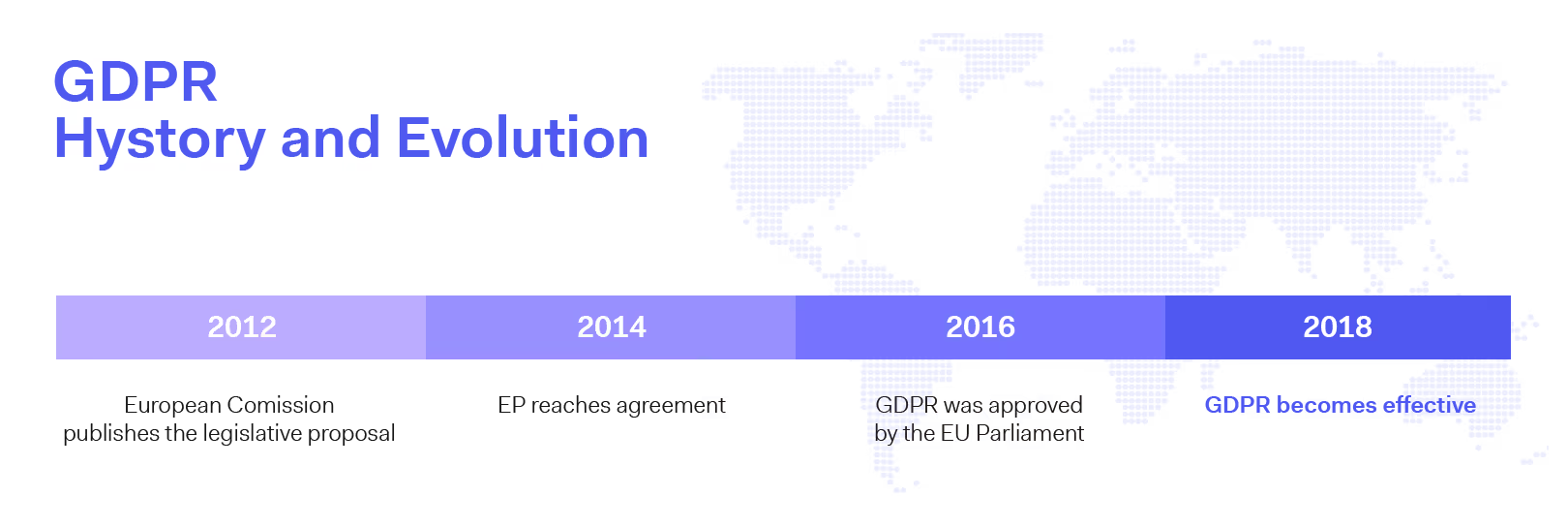
But with great intelligence comes great responsibility. Over the past decade, we have witnessed growing regulatory attention to matters of privacy and data protection. In the European Union in particular, the General Data Protection Regulation (GDPR) mandates the type of information businesses can legitimately collect and process about their customers. Organizations that fail to comply face severe penalties, with fines reaching up to €20 million or 4% of global revenue—not to mention the reputational damage that follows.
So how can businesses lawfully integrate OSINT into fraud prevention strategies while remaining GDPR-compliant? This article explores the legal landscape, key compliance principles, and actionable steps to ensure that fraud detection remains both effective and ethical.
What is OSINT, and how is it used in fraud prevention?
Open-Source Intelligence (OSINT) refers to the collection and analysis of publicly available information from digital sources. Originally used in government intelligence and cybersecurity, OSINT is now a critical tool for businesses, particularly in sectors that require fraud prevention, risk assessment, and identity verification through alternative data sources. OSINT involves gathering and analyzing non-restricted data from various digital footprints, including:
- Domain records and website metadata – identifying connections between digital properties.
- Public databases – corporate records, regulatory filings, and breach exposure databases.
- Online activity – user profiles, interactions, and behavioral patterns.
- Device and network data – IP addresses, geolocation, and browsing behaviors.
Because OSINT relies on publicly accessible data, its privacy and compliance implications—especially under GDPR—can be complex and nuanced.
The utilization of OSINT to detect fraud across industries
Various industries leverage OSINT for different fraud prevention use cases, including:
- Financial services & banking – preventing new account fraud
New account fraud, often fueled by synthetic identities, is a major issue for banks and financial institutions. OSINT helps detect these fraudulent signups by analyzing digital footprints, such as phone and email history, device signals, and inconsistencies in user behavior—allowing institutions to flag suspicious accounts before they become operational. - Cryptocurrency & fintech – identifying synthetic mules
Fraudsters use synthetic mule accounts to move illicit funds across crypto and fintech platforms undetected. OSINT assists in identifying these fraudulent wallets by tracking linked emails, phone numbers, and behavioral patterns, mapping connections between seemingly unrelated accounts, and flagging high-risk transactions before they escalate. - Online marketplaces & e-commerce – detecting multi-use digital signals
Fraud rings exploit online marketplaces by controlling multiple accounts to manipulate transactions, fake reviews, or commit chargeback fraud. OSINT tools cross-reference emails, phone numbers, devices, and IP addresses across accounts, helping platforms detect coordinated fraudulent activity and prevent marketplace abuse. - iGaming – stopping bonus abuse & multi-accounting
Fraudsters exploit iGaming promotions by creating multiple fake accounts to claim bonus rewards. OSINT combats this by tracking shared digital fingerprints, identifying accounts that reuse the same credentials, devices, or locations, as well as accounts using disposable phone numbers or newly created email addresses. - Telecommunications & ISP providers – preventing SIM swap fraud
SIM swap attacks allow fraudsters to hijack phone numbers and bypass authentication systems, leading to financial account takeovers. OSINT helps detect high-risk number changes, recent porting activity, and unusual login behavior, enabling telecom providers to block unauthorized swaps before they happen.
Although OSINT is an effective fraud prevention tool, it often involves processing personal data—making compliance with data protection laws like GDPR a top priority. The next section explores how GDPR affects OSINT usage and what businesses need to consider when implementing OSINT-based fraud prevention strategies.
How does GDPR impact the use of OSINT?
The General Data Protection Regulation (GDPR) establishes strict guidelines on how personal data is collected, processed, and stored within the European Union (EU) and beyond. Technically, any dataset containing identifiable personal information—such as names, emails, IP addresses, or phone numbers—falls under GDPR’s jurisdiction.
Key GDPR principles that affect OSINT use
Organizations using OSINT for fraud prevention must consider several GDPR principles:
- Lawfulness, fairness, and transparency – companies must have a legal basis for collecting and processing OSINT data. Users should also be informed about how their data is used.
- Purpose limitation – OSINT data must only be used for legitimate fraud prevention purposes and not repurposed for unrelated activities.
- Data minimization – only the necessary amount of data should be collected and stored, avoiding excessive or irrelevant information.
- Storage limitation – data retention policies must ensure that personal data is not stored longer than necessary.
- Security & integrity – OSINT data must be protected from unauthorized access, requiring encryption and controlled access measures.
These principles make it clear that businesses cannot use OSINT without a structured compliance framework. Even if the data is publicly available, companies must assess whether collecting and processing it aligns with GDPR’s legal foundations—a topic covered in the next section.
When is OSINT processing justified under GDPR?
Processing publicly available data doesn’t automatically make OSINT compliant with GDPR. To protect themselves, businesses might want to establish and document a legal basis for collecting and analyzing OSINT data for fraud prevention. While several justifications exist, not every one of them might apply to private companies.
Legitimate interest vs. consent in OSINT-based fraud detection
Under GDPR, companies can process personal data if they can demonstrate a legitimate interest that does not override individual privacy rights. Fraud prevention is considered a valid legitimate interest, provided that:
- The data is necessary for detecting fraudulent activity.
- There is no less intrusive way to achieve the same goal.
- The data is not used excessively beyond fraud detection purposes.
On the other hand, explicit user consent is another potential legal basis—but it is rarely practical in fraud detection. Fraudsters are unlikely to give consent, and requiring it could slow down digital onboarding processes in other cases. This makes legitimate interest the more commonly used justification.
Law enforcement exceptions: GDPR articles 6 & 10
Certain law enforcement activities are exempt from GDPR’s stricter rules when processing personal data for crime prevention. However, private companies do not qualify for these exemptions, even if their fraud prevention efforts align with public safety objectives. The only exception is when businesses collaborate with law enforcement agencies, sharing relevant OSINT data under a legal framework. Otherwise, organizations must comply with standard GDPR provisions.
Third-party OSINT vendors: compliance considerations
Many businesses rely on third-party OSINT providers for fraud detection. However, outsourcing does not eliminate GDPR responsibilities. When working with external vendors, companies must ensure vendors act as data processors, following GDPR compliance guidelines.
Businesses also need to establish clear agreements outlining how data is processed and stored by third-party providers. In addition, they have to verify that OSINT providers do not collect or process data unlawfully. Failing to vet third-party vendors can result in GDPR violations, even if the company itself follows proper compliance protocols.
Balancing OSINT and privacy: key steps to stay GDPR-compliant
Using OSINT for fraud prevention requires a structured approach to compliance. While the legitimate interest basis usually justifies OSINT data processing, organizations must ensure their activities fully align with GDPR principles. A streamlined compliance framework usually includes the following steps:
- Sign a Data Processing Agreement (DPA) with third-party OSINT vendors
If using third-party OSINT providers, businesses must classify them as data processors and sign a Data Processing Agreement (DPA) to define their role and responsibilities. Vendors should not store or process excessive personal data, and their security policies should align with GDPR. - Store and process data in GDPR-compliant locations
OSINT data should always be processed within the EU or equivalent jurisdictions that meet GDPR standards. If personal data is processed outside the EU, businesses must ensure that data transfer mechanisms align with GDPR’s adequacy requirements. - Apply strong access controls and data retention limits
Restricting OSINT data access is essential for security and to ensure GDPR compliance. Teams should implement role-based permissions and store only what is truly necessary for fraud detection. Data that is no longer needed should be securely deleted, minimizing regulatory exposure.
Evolving industry perspectives on OSINT for fraud prevention
In recent years, awareness of OSINT’s crucial role in fraud prevention has grown, challenging earlier concerns about its compatibility with privacy regulations—especially GDPR.
This shift isn’t just coming from industry practitioners. Regulators and oversight bodies are also recognizing OSINT’s value in tackling fraud, particularly in today’s complex digital landscape, where traditional identity checks often fall short.
From financial institutions to law enforcement, the use of publicly available data has become essential for pre-transaction screening, customer due diligence, and cross-border investigations. A 2024 report by the World Customs Organization (WCO), for example, highlights how integrating OSINT into intelligence practices enhances fraud detection and strengthens overall supply chain security.
This growing acceptance reflects both the evolution of OSINT methodologies and the increasing demand for dynamic, scalable tools that can detect threats in real time—without compromising regulatory compliance.
OSINT and GDPR: the responsible approach to fraud prevention
Rather than treating GDPR as a limitation, businesses have begun to embrace it as a framework for building responsible fraud prevention strategies. In particular, a compliance-first approach ensures that:
- Legitimate interest assessments are in place to justify OSINT processing.
- Vendors and third-party providers align with GDPR’s data protection standards.
- OSINT insights are used strictly for fraud prevention purposes and not repurposed for unrelated activities.
Having a privacy-centric OSINT strategy paves the way for enhanced methods of combating fraud while staying within legal boundaries.
Businesses that embrace compliance-first OSINT solutions won’t just avoid fines—they’ll build trust, strengthen fraud detection, and future-proof their security operations. The choice is clear: adapt, comply, and stay ahead, or risk falling behind in a landscape where privacy laws are tightening and fraud tactics are evolving.
Questions and Answers
1. How can OSINT be effectively integrated into existing fraud prevention strategies?
For OSINT to enhance fraud prevention, it must be systematically integrated into existing security and compliance workflows. Companies can achieve this by:
- Incorporating OSINT into risk scoring models – fraud teams can use OSINT insights to assess the legitimacy of users based on their digital footprints.
- Automating data analysis – using OSINT tools as fraud detection systems to allow businesses to continuously monitor high-risk accounts, domains, or transactions.
- Enhancing KYC and identity verification – OSINT data can help cross-check onboarding details against publicly available information, reducing identity fraud.
- Collaborating across fraud, compliance, and security teams – structuring OSINT findings into actionable reports ensures that investigations align with regulatory requirements.
When combined with machine learning and behavioral analytics, OSINT-driven fraud prevention becomes even more effective, allowing businesses to detect fraud earlier and with greater accuracy.
2. Does GDPR apply to OSINT data collected outside the EU?
Yes, GDPR applies to any organization processing the personal data of EU citizens, regardless of where the company is located. This means that a U.S.-based fraud prevention company using OSINT data to assess risks for EU customers must comply with GDPR regulations. Businesses outside the EU must ensure their OSINT data processing meets GDPR’s cross-border transfer requirements, which may involve data adequacy agreements or binding corporate rules (BCRs) depending on their legal framework.
3. What happens if an OSINT vendor violates GDPR while processing fraud-related data?
If an OSINT vendor mishandles personal data in violation of GDPR, both the vendor and the hiring company may be held liable. The hiring organization is responsible for ensuring that the vendor is classified as a data processor and adheres to GDPR compliance requirements. Companies should conduct regular audits and compliance reviews to minimize legal risks associated with third-party OSINT providers.
Important disclaimer: The information provided in this article is for general informational purposes only and does not constitute legal advice. While efforts have been made to ensure accuracy, organizations should always consult qualified legal counsel when interpreting or applying GDPR requirements. Trustfull does not assume liability for actions taken based on this content.